Why I Hang On to an Old Piano
With October winds come the familiar fall references to the “thinning of the veil.” As we approach Hallowe’en (Samhain in the Celtic tradition), the feeling that our ancestors are nearby becomes heightened in me. Each autumn, in the midnight-blue room where I work, I create an altar for departed family—many of whom I never met in person, but whom I’ve come to know through stories.
In the end, our stories are what keep our families together long after our loved ones have passed away.
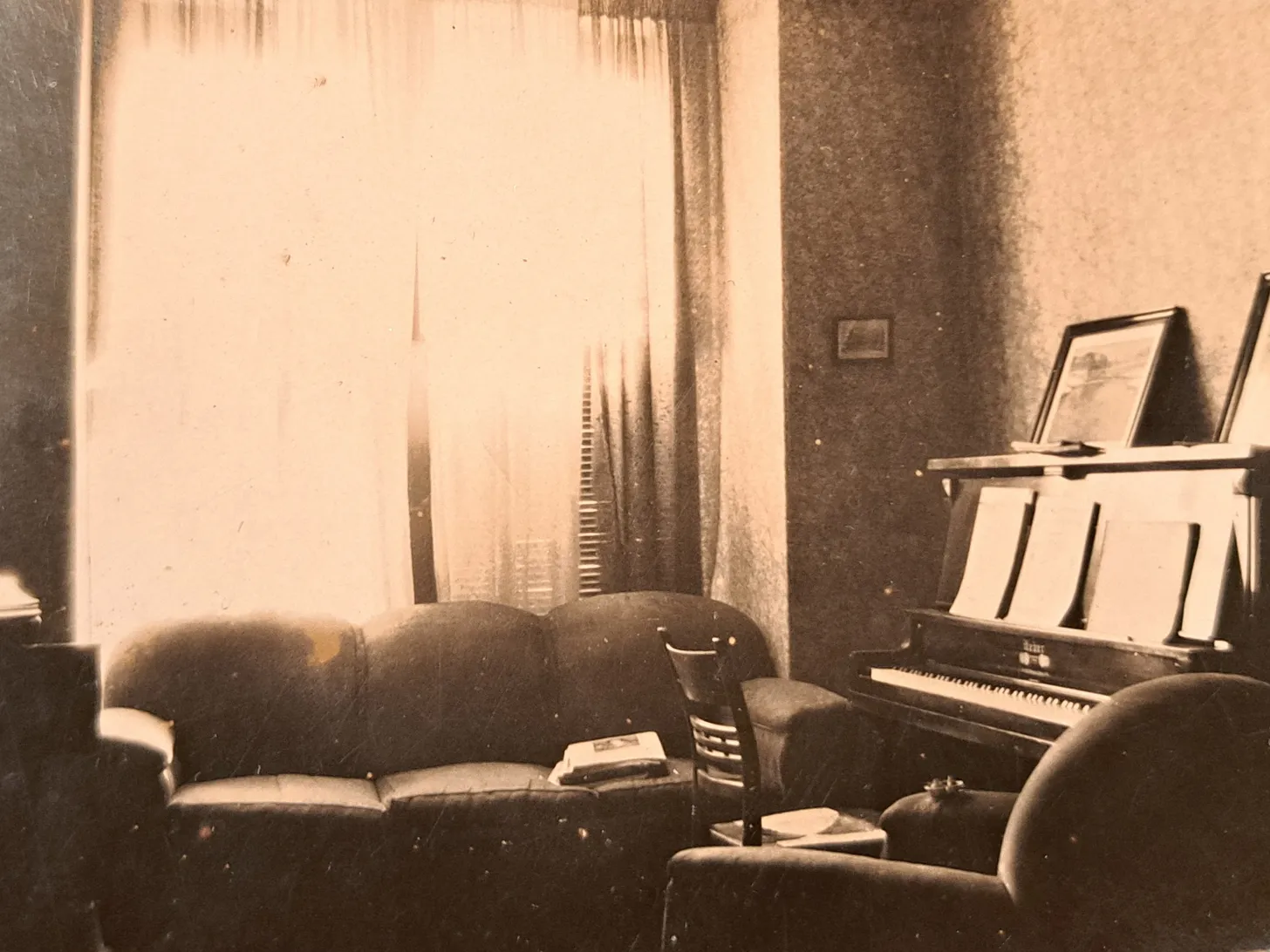
Some of the photographs on my altar show me people I knew and cherished. People whose parting may have been expected, but no less sad. And also, those who left suddenly. For years, despite having been raised in a relatively small family, I prided myself on being close with quite a few elders—individuals whose presence and unique strengths were vital in my life. Yet between 2016 and 2022, six of my family members died, including my father. By the time the pandemic hit, I realized how exhausted and grief-spent I was, navigating loss at such a rate.
Do you revisit old family photographs?
Several years ago, while attending workshops on resilience and healing led by Jungian psychotherapist Rabbi Tirzah Firestone, I heard her say that family photographs are “direct portals to our ancestors.” Those words went deep.
Each one of us, in our own way, may choose to commune with those who have come and gone before us. Interpret such communications as you will. For some, intuition and active imagination provide pathways to insights, answers, and new meaning. For others, “communing” may simply be experiencing the feelings and awareness that arise in moments of mindful remembrance—gratitude, perhaps, for the learning and other gifts that have come through our relationships. Photographs are powerful catalysts.
I’ve included a list of resources at the bottom of this letter, respecting that we all have our distinct views on the subjects of family, ancestry, life and death, and the nature of this plane of existence—let alone anything beyond it. I’m not here to tell you what to think. Only to offer prompts and stories that may have some relevance for you. And, I hope, a dash of inspiration.
For valid reasons, not everyone feels close with their family of origin. But there are other ways of defining one’s family and honouring one’s own sense of belonging on this earth. This month, because I’m writing about connections with those who have gone before us, I want you to know how I choose to interpret the term “ancestor”:
- Those of our blood and bones
- Those family members with whom we’ve shared love, though not blood
- The ancestors of the land upon which we live
- “Soul family”—those beings across time and space with callings and life paths similar to our own
I believe we can learn and grow by paying attention to ancestral connections.
A Suggested Exercise
Who, among your ancestors, would you love to meet with over coffee for a great, long chat? Maybe also a hug and some laughs? A good cry? If you know who you’d choose, do you also know why? Of course, I’d be glad for you to share your response in the comments. But more importantly, I invite you to write your answer in a journal for yourself. You might choose someone whose presence you cherished in your childhood and youth. Or someone you never got to meet, but wish you had—one with a memorable, even wondrous story. You might choose someone you feel drawn to in your soul family—an individual, not related by blood, who shared a similar sense of purpose and set of inclinations and abilities.
That brings me to my choice of ancestor this week. My father’s father, John Walter Blackburn.
An Immigrant’s Story
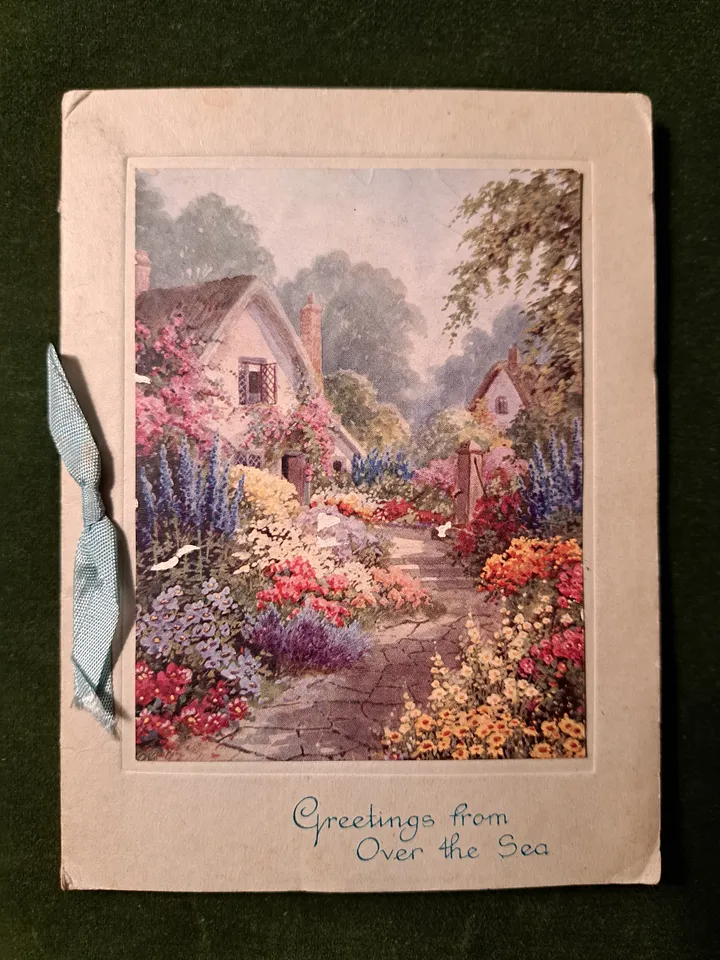
My Grampa Blackburn came to Canada from Yorkshire, England, at seventeen. The Great War had just ended. His older brothers had fought and returned, and also emigrated. Grampa crossed the ocean with his mother and stepfather on a ship called Metagama that brought them to Montréal, where my grandfather stayed. Unable to tolerate the cold Québec winters, his parents returned to England in 1923. And though they faithfully wrote letters, my grandfather and his mother never saw each other again.
In 2005, while writing The Shining Fragments, after visiting Northern Ireland I made a journey to the community of Alverthorpe, in Wakefield, where in 1902 my grandfather was born in a Blakeys Building tenement, near a street called Humble Jumble Row. A century later, during my records search at Alverthorpe’s local library (pre-Ancestry.com), I discovered a handwritten census record and my great-grandparents’ full names. My great-grandfather, who worked at a local crucible factory and died suddenly when my Grampa was eight, bore the same name as his youngest son, John Walter. But it was my great-grandmother’s name that seemed to leap, sending shivers through my back: Annie.
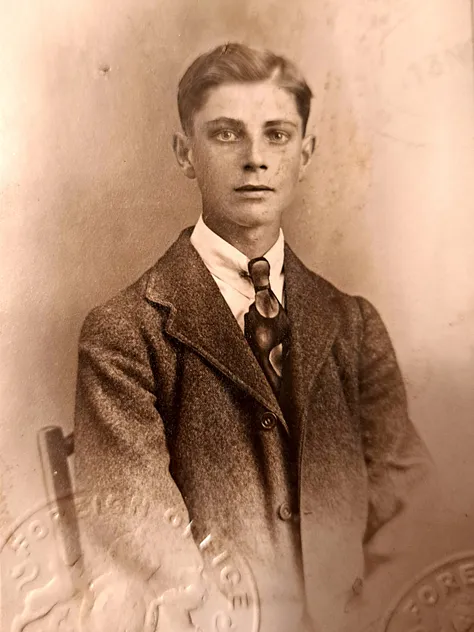
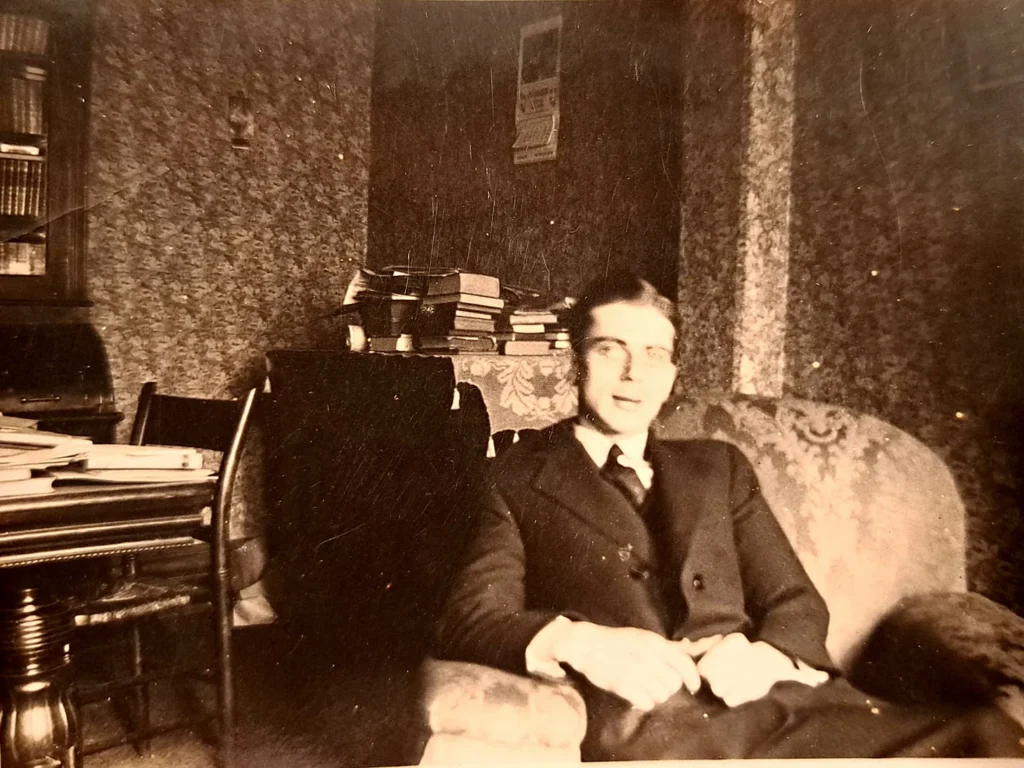
Anyone familiar with my first novel knows that Annie is a minor yet significant, ghostly character. A figure by that name is also the subject of a poem I wrote in adolescence—one published in the Toronto Star and told from the perspective of an old woman recalling her closest childhood friend. The poem, “I Remember You,” is addressed to “Annie,” a girl who drowned. Both times, as a middle school writer and again as an adult, I let myself be inhabited by a character bearing my great-grandmother’s name—something I didn’t realize until that moment in the Wakefield Library. Years later, I received these pictures.
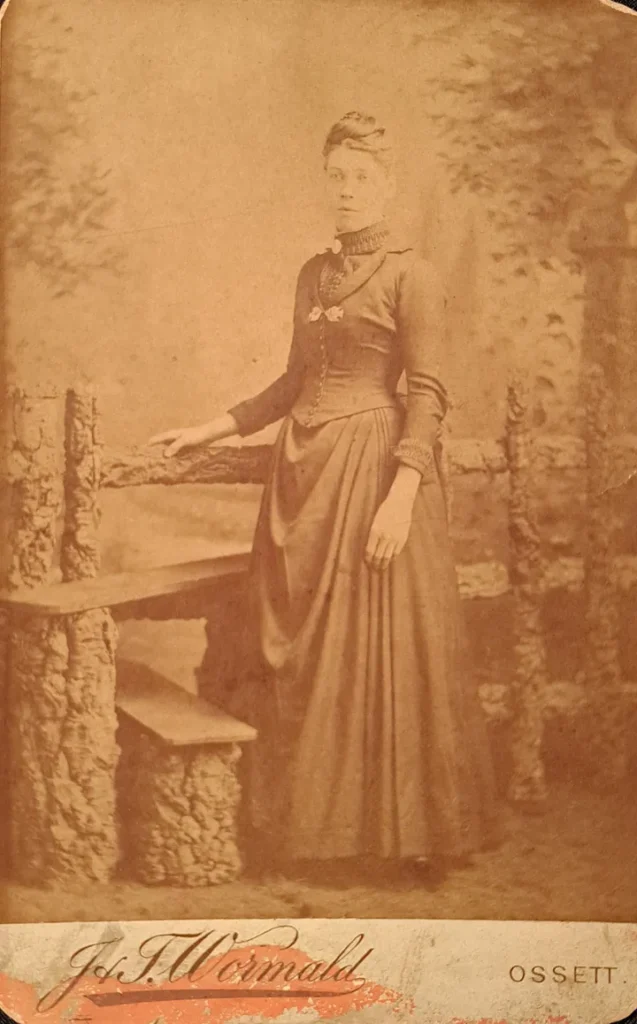
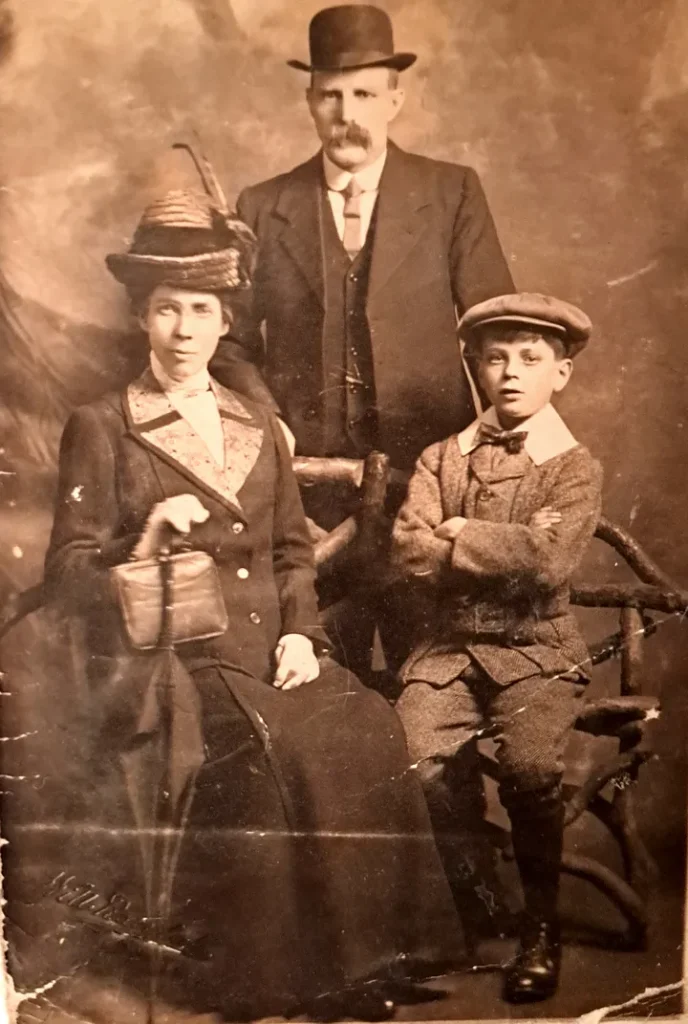
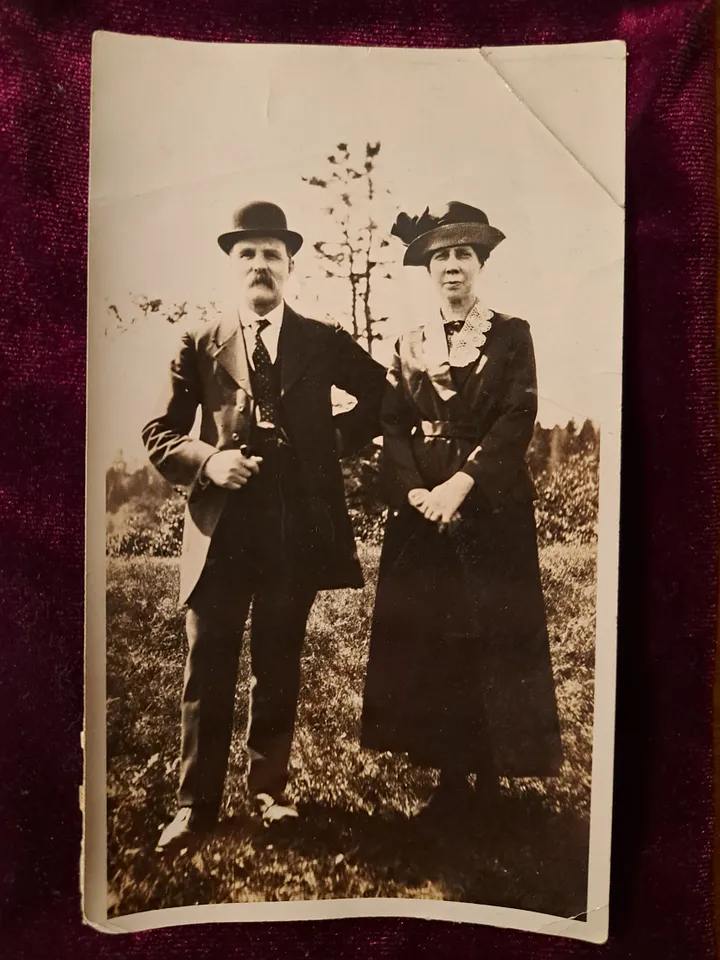
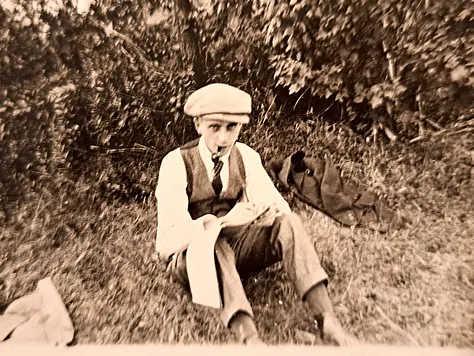
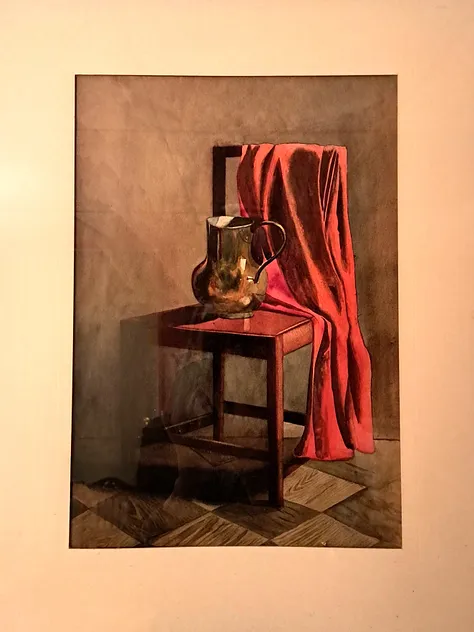
Growing up in Yorkshire, my grandfather had been a passionate young visual artist, and at fourteen had begun training at the Wakefield School of Art. Grampa had planned to continue his art studies in Canada, and to make his living as a commercial artist and painter. But he also loved music. An uncle on his mother’s side was a concert violinist who’d given my grandfather lessons. I assume John also learned to play the piano back in Wakefield. However, it was only on the voyage to Canada that he realized he wanted to become a musician. That insight changed everything. It caused him to transform his concept of himself—who he was and how he’d need to learn and grow in order to serve as an artist. John enrolled at McGill University in Montréal where he studied music, specializing in playing the organ and directing choirs. My grandfather’s favourite composer was Bach.
At McGill, on his final organ performance before a panel of adjudicators (known as a “music jury”), Grampa received praise from Sir Ernest MacMillan. Dr. Healey Willan, the dean of Canadian composers, was my grandfather’s composition teacher. Once out of university in the early 1920s, John earned his first job—as assistant organist to Dr. A. E. Whitehead at Christ Church Cathedral, Montréal.
My grandfather fell in love with my grandmother in Sherbrooke, Quebec, where he’d been hired at the church where she sang. After marrying, they moved to various places, setting up house in Moose Jaw, Saskatchewan, and later in Sault Ste. Marie (the “Soo”), Ontario, then finally settling with their three children in the City of Stratford.
Grand
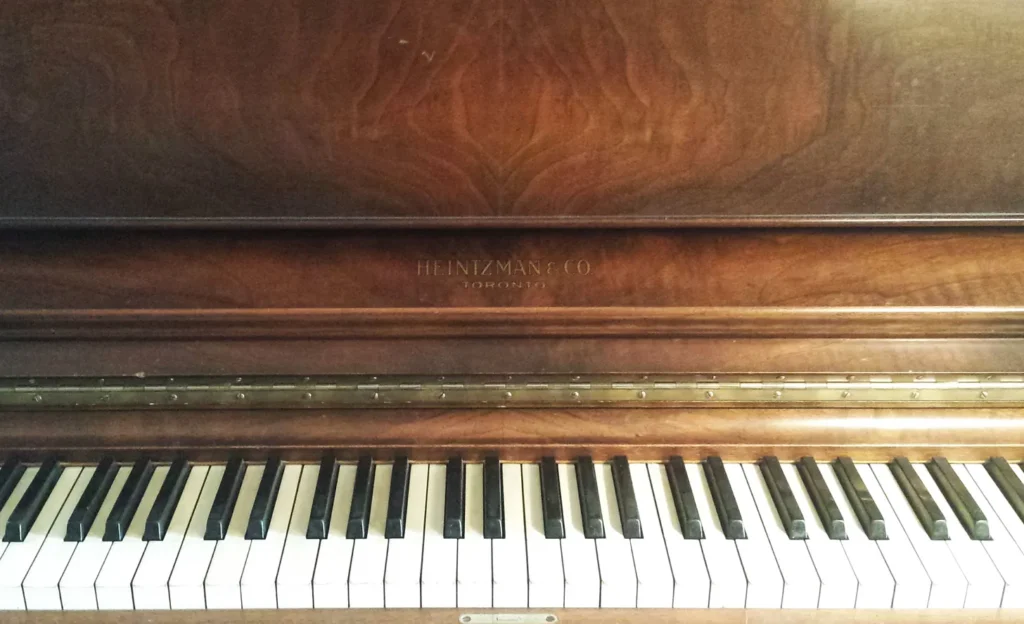
Though his life wasn’t perfect (whose ever is?) my grandfather lived his dream. That included working for decades as a church organist and choral director. During their days in the Soo, he also directed musical theatre. In the 1930s, their home had two pianos, including the Heintzman upright grand he’d later have moved to Stratford, where Grampa would continue playing and giving lessons his whole life. He taught music at Stratford Collegiate, and he was music supervisor at the Normal School. His first love was composition. In 1957, the American Guild of Organists selected one of his pieces for its associateship jury test number. The only other composers selected that year were Buxtehude and Bach.
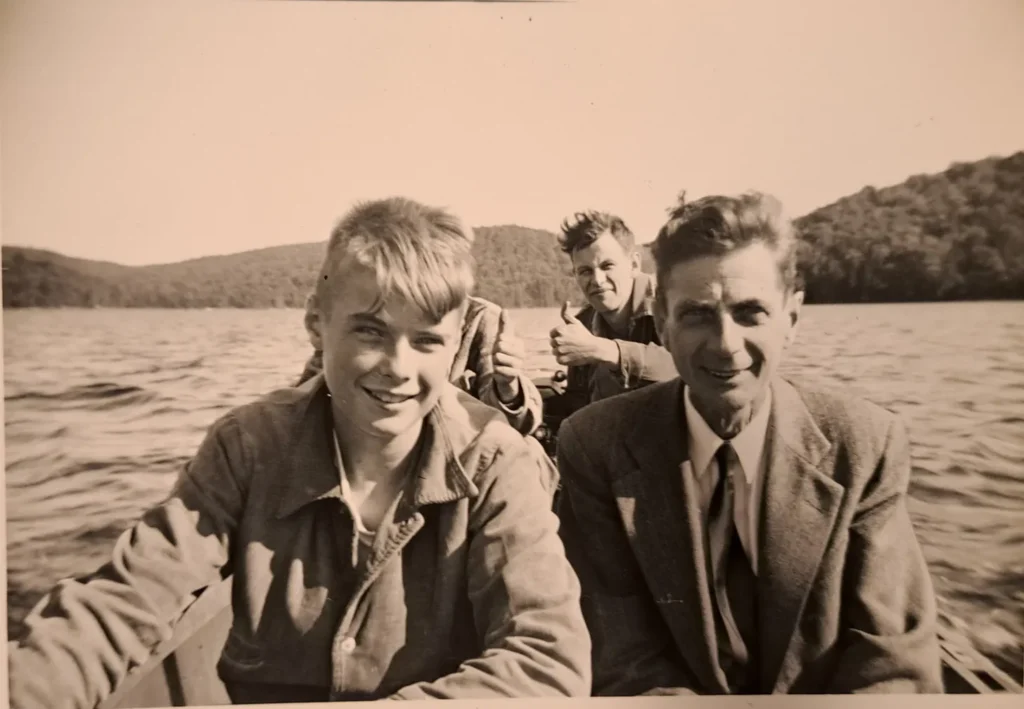
In his spare time, my grandfather was also a bibliophile who, along with my grandmother, in their sixties, ran a Kitchener bookstore called Blackburn Books. He continued to paint.
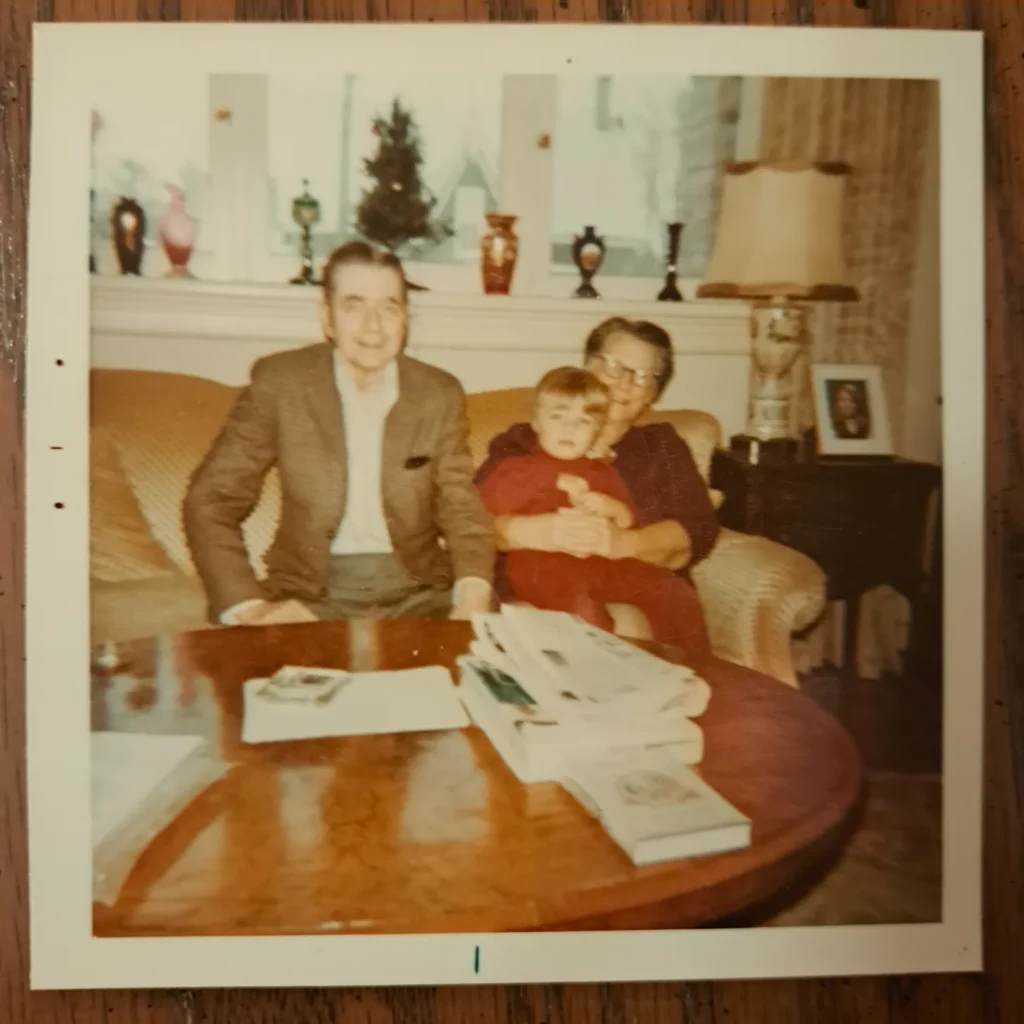
Eventually, all the smoking Grampa had done since boyhood symptomized as emphysema. By the time I knew him, he was a dying man.
I love this quote on death by Steve Jobs:
“Remembering that I’ll be dead soon is the most important tool I’ve ever encountered to help me make the big choices in life. Because almost everything—all external expectations, all pride, all fear of embarrassment or failure—these things just fall away in the face of death, leaving only what is truly important.”
My grandfather’s life and mine overlapped by about a decade. For much of that brief span, he made the most of his time with me. Grampa read to me from the German short stories he’d translated as a hobby, printing them in pencil on old sheets of exam paper. He had a hard time writing in cursive, he said. Music students still came to the door when we were finishing up meals, and Grampa accompanied them to the living room where the piano sang out. Then, he’d teach me. I was musical, which he recognized. I was also a bookish kid, and he saw that, too. I loved to draw and paint. I’d practise my school speeches in their old living room with its high ceiling and crackling fire my Gramma kept stoked with empty egg cartons and cereal boxes. When we are alone in that room together, I’d ask my Grampa about England which seemed like a fantasy place to me, and at the same time, a land I wanted to get back to. Did everybody want to get back to the lands of their ancestors? Grampa and I watched Mannix. He smoked his pipe.
In the spring before he died, he came to the piano one last time, masked and dragging an oxygen tank. Sitting down on the old bench, Grampa raised and lowered his hands, letting Bach’s music flow through everything. For a few minutes, the house resounded with that exhilarating crush of counterpoint. In Latin, the musical term “fugue” means “flight.” As I listened to my grandfather play, I could feel his soul flying beyond the confines of shrinking lungs and a breaking body. As his fingers moved, I heard him breathing with the music, and the once-frail person on the bench revealed an ageless spirit—one who’d moved along Montréal’s Sainte-Catherine Street to take his turn at a grand instrument. To go to work. And that was his greatest gift to me. That memory. The awareness that my grandfather could connect with a power both within and beyond him. I knew, in my work, I wanted to feel that kind of connection.
In cursive, he signed his royalties from a New York publishing house over to me. My Grampa left me his piano.
Writing this post, I realized that my life since his departure can be measured in eight piano moves. I’ve watched the Heintzman go up three storeys in a walk-up apartment building, and down again, when a romance ended. It’s travelled various elevators on its end. More recently, I’ve awaited the piano’s arrival at our family home in Gatineau, Québec, where it remains with us, still sounding, though it doesn’t get played as often as I’d like. Music was not to be my path. However, I keep the piano for what it still tells me: “Live your dream.” I keep it in remembrance of my grandfather who recognized an artistic kid and tried to help her.
Going into the arts doesn’t mean following a straightforward path. The decisions we make have contrapuntal qualities, often running counter to logic. But it does mean a life of alignment with one’s sense of soul. Years after my grandfather had died, my grandmother said he’d told her he knew I had the heart of an artist, and that my biggest challenge would be to choose which form of expression to follow and serve. Eventually, as had happened with him, my path chose me.
In my talk for paid subscribers later this month, I’ll be addressing the importance of aligning one’s vision with one’s soul—unpacking how to interpret that in a way that’s useful. Freeing.
Who, among your ancestors, would you love to meet for a cup and a conversation? What would you ask? What comfort might you seek? Set that intention before you go to sleep, and dream. See what happens. Light a candle, write your questions, and discover what answers come through your pen. Gaze at a photograph, then close your eyes. Listen.
Hart House Carillon, Toronto. Artist unknown.
Happy Canadian Thanksgiving.