Family Secrets, “Women’s Madness” & a Poem
Why set a book in a 1920s mental hospital?
Maybe the answer’s in my blood.
As you might know, if you’ve read some of my poems, in 1910 one of my great-grandmothers on my father’s side, his mother’s mother Jessie Emmaline, was committed to an insane asylum. Crippling insomnia and depression following a hysterectomy in her thirties left her unfit for being, as she had been, a very active farmer’s wife. A mother raising young children. While initially Jessie was to have gone for a short hospital stay in order to be seen and rehabilitated, her visit turned into a fifty-year residency at Montréal’s Protestant Hospital for the Insane, ending only when she died.
To be clear, my new novel River of Dreams is not my great-grandmother’s story. While I’ve dedicated the book to her, and to the many other women like her, it is entirely a work of fiction. Yet it points to something very real—a conditioned experience of powerlessness in the face of a prevailing system of thought. Specifically, the century-ago belief that people with mental illness, or mental differences, including disabilities, should be hidden. That mental illness is a stigma. A family curse.
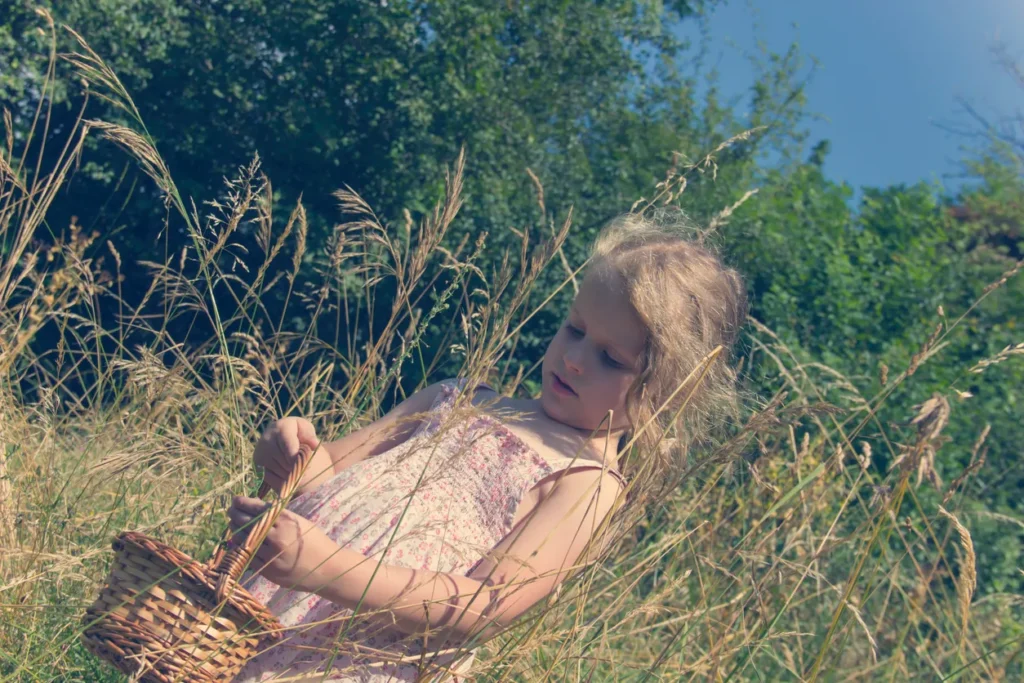
My grandmother was six when her mother went away, and for the rest of her life she remembered waving goodbye. Promising to take care of her little brother until Jessie came home. None of them knew it wouldn’t happen until 1960. Then, Jessie’s body was returned to a small Anglican parish in the Eastern Townships of Québec and laid to rest with her husband and family. My family.
Do you live with a family story once confined to shadows?
My grandmother kept her mother’s life a secret from her children so they wouldn’t have to bear the whispers, taunts, and judgements she’d endured as a child. The great fear of it happening again. She wanted to shield them. But of course, the revelation of her mother’s existence was unavoidable. And shattering. The only time my father and his two siblings got to see their grandmother was as young adults, heads bowed, and standing before her open casket. They’d grown up believing she was already dead.
In telling you of River of Dreams’ setting, a 1920s Toronto mental hospital, a researched and reimagined version of the iconic local granddaddy of asylums we chattered about in 1970s schoolyards—the white coats, the “lock-up,” the various conjured images from late-night horror movies—I am not pointing directly to the novel’s most central issue which has to do with another kind of mental difference. What it’s like to live with heightened perceptual abilities in a culture that resists believing in such things. Let alone cultivating them. Soon, there will be time to tell you more about my main character Avery (Annie) Conlon’s “gifts.” Her struggles.
I’ve often said the whole world is searching for a missing mother. And in River of Dreams, the subject of maternity forms a crucial thread. When we dream of our mother, a grandmother, or a great-grandmother, and she appears to us particularly charged, might we also be dreaming of the Great Mother? Have you longed for her, too?

While writing this novel, one of the books I read on the topic of “insanity” was Jane Ussher’s Women’s Madness: Misogyny or Mental Illness (University of Massachusetts Press, 1992). What grips me most in Ussher’s work isn’t the witch hunt material (though it’s compelling), but the author’s vulnerable account of witnessing her own mother’s period of sadness and emotional volatility in the early 1970s—her mood swings and tears. Behaviours her children secretly made fun of in order to cope with their private terror. Unlike my grandmother’s mother Jessie, when Ussher’s mother went away to a mental hospital, a short time later she returned. Eventually, after leaving her marriage and starting a new life, she found balance.
How many of us growing up in the second half of the twentieth century sensed anguish in our mothers? A sadness that couldn’t be explained? Those mothers—my mother—women in the “Women’s Lib” generation were ever struggling on the edges of division. Within society, and within themselves. How many of them were generally unhappy? Numb? Relegated to a domestic life when they wanted to be out and active in the world. Or vice versa. Reduced to opposing categories: “the women who worked” beyond the home, versus “the women who didn’t.” Some, perhaps a great many, remained committed to mismatched and often joyless marriages. Or worse.
As a species, we’ve been navigating change so quickly that at this point I can’t imagine anyone is surprised to see anxiety on the rise. Those of us born in the mid-twentieth century have been adapting our whole lives. But then, so did our parents and their parents have to adapt. Historical fiction is always written for the present time.
In order to come out of the shadows, to have a voice, and to be fully participatory in a culture that would otherwise have kept us put away and “venerated” by our hearths, over the decades women have coped with immeasurable change. So be it. More than ever, this world is calling for a restored and healthy feminine energy to rise—collectively and individually. Regardless of our chosen gender (and I know many conscious and reflective feminist men), we each have the potential to channel that energy.
Since it’s National Poetry Month, I’ll leave you with a poem I wrote many years ago. It’s about one of my last visits with my grandmother, Jessie’s daughter Mabel Frances, who for my whole young life embodied the archetype of the family matriarch. A force of love, she was proud, and also anxious, and fiercely protective of her children, grandchildren, and great-grandchildren. Like so many of us, at the end of her life, she experienced a final chapter of living in a care facility. Did she have dementia? I don’t know. What would it matter?

Matryoshka
I look for my grandmother
in a row of silver wheelchairs
at the People Care Nursing Home, Stratford.
She’s off in her thoughts
says the nurse
who comes by to remove the green plastic lunch tray.

Beside me my daughter starts twirling
in her party dress, singing quietly.
Tiny shoes pattering on the scrubbed tile.

I reach
to put my hands on the old woman’s shoulders;
bones under the print dress feel small.
“Gram.”
I say it
as if it were her only name
the one given to her at birth
by the woman who bore her and vanished.

Gram looks at me like I’m the ghost.

Her eyes
blue glass rounds
search past my managed smile
for a trace of true identity.

Before she can ask,
I pronounce my name
like a spell that might remove us
from the sleeping forest here.
I say it once, twice, three times
until at last she pulls me with her words
and we’re together.
“Oh, yes,” she says.
“You were the one I used to comfort
when you cried for your mother.”
© Robin Blackburn McBride
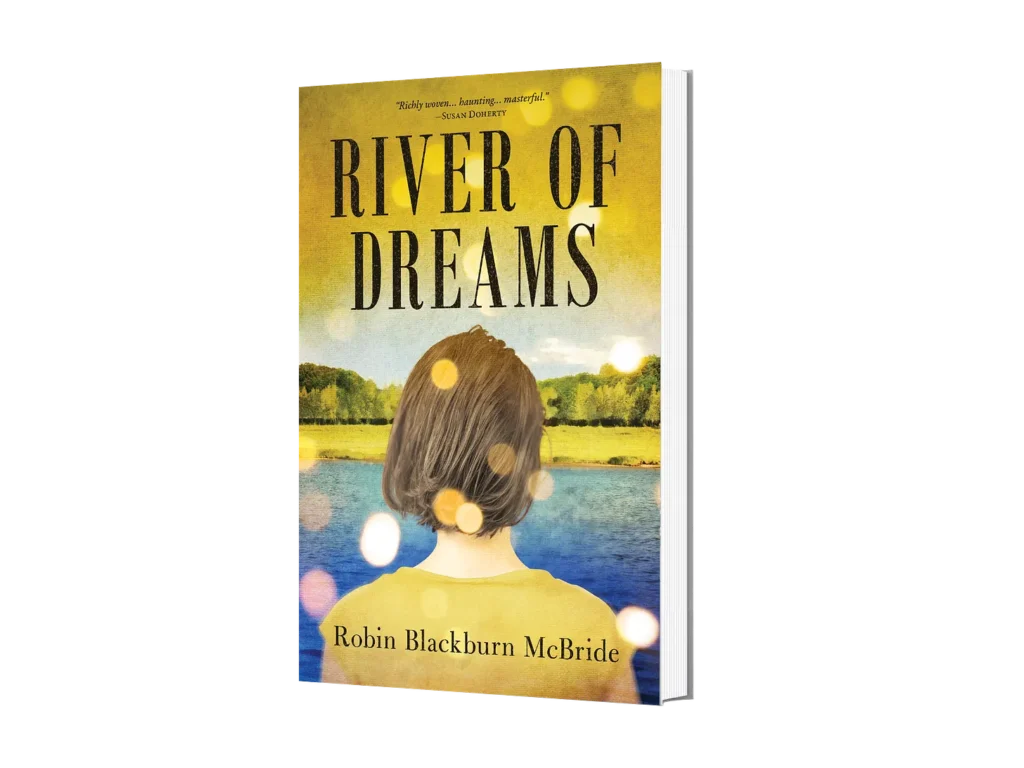
“Caught between her calling and society’s expectations… A haunting exploration of the fine line between genius and madness, and the courage it takes to embrace the extraordinary…”
—Susan Doherty, award-winning author of The Ghost Garden and Monday Rent Boy
River of Dreams is now available for pre-order. Books need early supporters. The novel will be released on October 1st, but pre-orders as early as now do a lot to help increase a new book’s visibility. I hope you’ll consider supporting this work by pre-ordering a copy today.
Related Posts:
Poetry
Essay
Quote of the Week:
“To be a woman is often to be mad… We are all in danger of being positioned as mad. Forming part of what it is to be a woman, it beckons us as a spectre in the shadows.”
—Jane Ussher
What’s Ahead:
Magic Animals Writing Gatherings
The second of three online writers’ circles will soon take place at Awakening Wonder. These spring gatherings are included among various gifts to Annual paid subscribers. You don’t have to have attended the first gathering in order to join us for the second or third, or both.
Our circles follow a simple structure, with much time to explore and write. The first one was fun and inspiring, with some intriguing occurrences.

Details:
We’ll meet via Zoom on the following two Sundays: April 26th and May 31st, from 1 – 4:00 p.m. Eastern. Our emphasis is on exploring story through guided drum journeying, with spacious silent time for writing, followed by (optional) group sharing.
In these generative sessions, our focus is experiential. And of course, the ideas sparked and developed during our time together may be expressed through any genre. Story fragments may arrive unexpectedly. Others may come in response to seeking solutions for a current work in progress.
If the upcoming event resonates, I’d love for you to be part of it. Please RSVP before next Wednesday, April 22nd (Earth Day) so that I can send you more information to help you prepare, including the Zoom info.
Look for my next newsletter on Beltane: Friday, May 1st.
Happy New Moon.
With love,
Robin