& Thoughts on this Novel’s Beginnings
Some stories are with us a long while. Elements swirling, mingling. We think we know where and when they began, only to discover the bottom of life’s river is deeper than we’d imagined. We can’t quite touch down.

An Unexpected Turn
The last time I wrote to you, I had plans for a short break. What I didn’t say was that I’d been bothered by an historical detail in my new novel—one my intuition told me I needed to check. Yet having submitted the manuscript for “the last time,” I’d been afraid to go back into research again. It had been years since I’d worked on that part of the book, in a pre-AI world. While I don’t (and never will) use AI in my writing, in research, it’s unavoidable now. When I eventually did the “fact-checking,” the findings were, as I’d predicted, unsettling. And also annoying. Being superficial, AI summaries caused one of the novel’s details to seem inaccurate. However, deeper (actual) research confirmed that what I’d written was plausible. Even so, I wanted to make adjustments. When I reached out to the publisher, I was lucky on two counts. First, he hadn’t yet sent the book to design. If that had been the case, I’d have had to let it go. (And honestly, it would have been fine.) Second, he agreed that the few slight changes were a good idea. All of this is to say that since I last wrote to you, I’ve gone back in time. And not just in the way I’d expected.
While the few changes are now finished, and once again, the manuscript is on its way, an unexpected effect of facing my fear, making the request, diving into articles, and touching writing that had been “done,” is that it’s brought me home to the novel’s origins. Or at least, to the question of its origins.
But can we ever locate a story’s true beginnings?
To some extent, River of Dreams started coming to me many years ago in Toronto’s Don River Valley. And my recent research took me back there, not just through the articles I read, but through my own journals where, re-entering the 1990s, I found a much younger version of myself wandering beside that river, scrawling thoughts, dreaming up a story. It wasn’t the same one I’m launching this fall. But a different, adjacent tale, first conceived of as YA fiction, about two girls living in Toronto’s Cabbagetown—one of them in the present, and one in the past. The girl in the past bears the same name as the main character in River of Dreams, “Annie.”
Yet another version of Annie had already existed in me long before those ‘90s river walks. She’s the central figure of a poem I wrote in sixth grade, about a child who dies and a friend who looks back on their days together decades later. In a 1977 “Starship” column featuring work by young writers, The Toronto Star published that earlier Annie in my poem, “That’s How I Remember You.” But how do we remember anything? Through story. And stories change. My Annies have changed.
If you’ve read my first novel, The Shining Fragments, you’ll recognize Annie as protagonist Joseph Conlon’s unborn baby sister. A ghost who haunts him—not so much by her presence, as by her absence. But what is presence? And what is absence? Can we mistake one for the other? And when we create, do our ancestors ever make themselves present? Or, are they missing, like Joseph’s ghosts—shadowy figures bound to a past that no longer exists, with stories we overlook, ignore, or hide, yet perhaps one day, dare to illuminate. It wasn’t until 2005, while standing in a library 3,600 miles from home, that I discovered my father’s paternal grandmother’s given name—one I’d never heard mentioned—written neatly in pen on a 1900 census register: “Annie.” Could it be that for my whole life, she’s been whispering her name? If such a thing is possible, then what of the other great-grandmothers? What have they been whispering?
Maybe the land—walking beside water—does that. Connects us with a sense that our helping spirits are with us. Certainly, the land beside the Don River became a haven for me, a creative seedbed in the ‘90s. Last week, in my need to deal in facts, I couldn’t avoid also searching those old journals. A ghost of my former self, peeking up at me from curling pages. All the river notes and dreaming. Being on those flats, winding my way north—sometimes on a bike, but mostly, walking. Needing to touch something old and deep, beneath the surface of the city. Inside of me.
To the Celtic mind, water is the passage to the Otherworld. As is the head—since through our minds, we touch non-ordinary reality. Our dreams.

While that long-ago YA story fell away, the essence of the girl back in time, that Annie, remained. As old as anything in me. As alive.
The unexpected gift of reaching out to make a few manuscript changes was being back there again, in my mind’s eye, in the valley. My home city. Living in Cabbagetown, wandering that liminal space, not just for inspiration, though it often came, but for creative survival—as, thirty-plus years ago, so many of my life’s details seemed stacked against it. My theatre days were over. The singing done. The dancing, fading. Or so I’d feared. All the young girl stories and poems filed away. Replaced by the young woman roles: wife, mother, teacher, breadwinner. Closeted writer. (At home, I scribbled at a desk in a tiny storage room.) I don’t recommend women wander river valleys and ravines on their own. But would I change those long-ago meanderings? Not one second of them. The cornflowers. The high grasses, and logs for pausing. Dreaming. The late summer cicadas and the willow trees. The bridges. The strange, hybrid beauty of it all. That borderland.

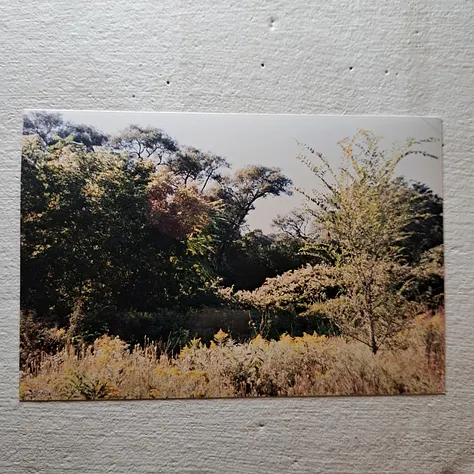
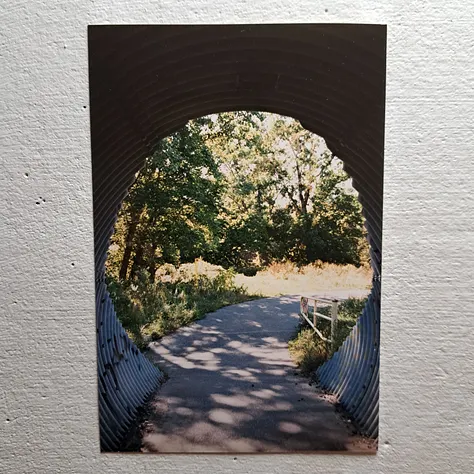

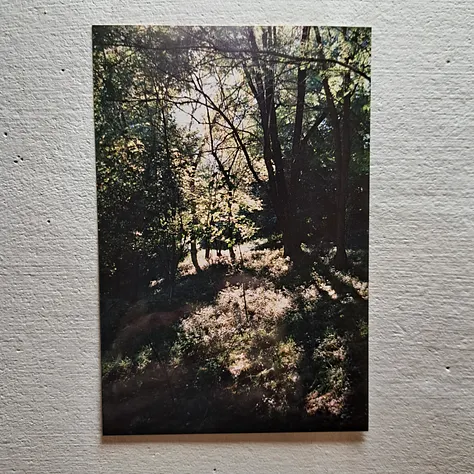

In a part of the world that was so seemingly safe and ordered, being a young woman—a passionate, free-thinking woman—was one of the more difficult assignments of this lifetime. My twenties and early thirties were difficult years on a level I couldn’t fully grasp or share with anyone, but my journal. I was in a marriage that would end, though not quite seeing that yet. Perhaps sensing it. Fighting the sense. Fighting myself. Working at a job that demanded almost all of my creative energy in ways not quite aligned with the artist in me (where had she gone?), but close enough to keep me employed. Fortunately, I adored my students. By my own choice, I was mother to a child I also adored and loved with all my heart. And like the mothers I knew, bound to prioritizing that relationship above all else.
So, the way I honoured the very old part of me was by writing in a journal. And taking those walks through the streets and Don Valley.
To be clear, what I’m sharing with you in this letter is not the story that is River of Dreams. Obviously, this isn’t the kind of material one sends to a publicist. But like roots under a watery bed, tangled deep, not wholly visible, this is the story beneath the story. Part of it, anyway. My central character, Annie, who goes by Avery, is not me. She is, in this latest and perhaps final iteration, fully herself—a young woman torn in essential ways I hope readers will recognize and find relatable. Compelling. I promise I’ve written you a suspense novel.
Maybe it’s taken me all this time to fully see and appreciate what it is to be a young woman. To write a young woman protagonist—one with secrets and difficult choices. To let her inhabit me. Writing and reading are borderlands, too. The imaginal realm, as real a place as any.
I have much to say on the topics and issues the novel raises. And the various reasons why I’ve felt driven to bring it into form for such an indeterminately long time.
But for now, in the spirit of Awakening Wonder, I’ll leave you with an anecdote from last week’s searching. It’s not giving away much to tell you that at various points in River of Dreams, a fox appears. A catalyst. An emblem of all things wild. When I was revisiting a 1995 journal, flipping through entries I’d scrawled in the weeks following a guided river walk by a Toronto naturalist, my notebook fell open to the description of a dream: “By the river the fox comes to me. Soft, red pelage. The animal settles into my lap. He says follow the river.”

A while ago, if you’d asked me when I started writing River of Dreams, I might have told you part of it came to me in 2002, or that I was writing a section of it in 2011, at a meditation centre in Upstate New York, wandering the woods and fields. Or I might have said it really began in 2014, before my life took another direction and I wrote a different book. Or that 2019 was the start year, and I started again in 2020. But that dream of the fox by the river was as significant as any other “beginning.” In the same scratched and spiral-bound red journal, I came across a goal to have a poem published at thirty—along with a parenthetical oh, please! —followed by a note chiding myself for being “like a child begging for a toy.” But we must not discount that child inside us. Pages later, I found these words: “We are laying stores of treasure. What I do with children is help them to lay stores of treasure. They will travel far before they find it again. We are all voyagers of return.”
Finally, I discovered notes on two other characters I recognize. They’re in my next novel, the one I’ll “begin” in 2027.
As with any river that is left to its own nature, this river of life winds. It has no clear bottom. There are no straight lines.
Introducing River of Dreams
Over the years, many people have helped with this project. But no individuals have helped me more than the book’s editors, Susan Sutliff Brown and Julie Roorda, and its publisher, Michael Mirolla. My heartfelt appreciation also goes to six colleagues, fellow novelists who read an almost-finished version and put beautiful words together for it. You’ll see their advance praise on the web. Huge thanks to artist David Moratto for designing this sparkling cover.

River of Dreams is now available for pre-order. Books need early supporters. The novel will be released on October 1st, but pre-orders as early as now do a lot to help increase a new book’s visibility. I hope you’ll consider supporting this work by pre-ordering a copy today. In the online space, you may notice that not all of the descriptive text is in place yet, or completely formatted, but we’re working on it. As I write this, the cover is not visible beside the title. That’s because I begged the team at Guernica to hold off so that I could show it to you first.
Your presence and reading mean so much.
“Caught between her calling and society’s expectations… A haunting exploration of the fine line between genius and madness, and the courage it takes to embrace the extraordinary…”
—Susan Doherty, award-winning author of The Ghost Garden and Monday Rent Boy
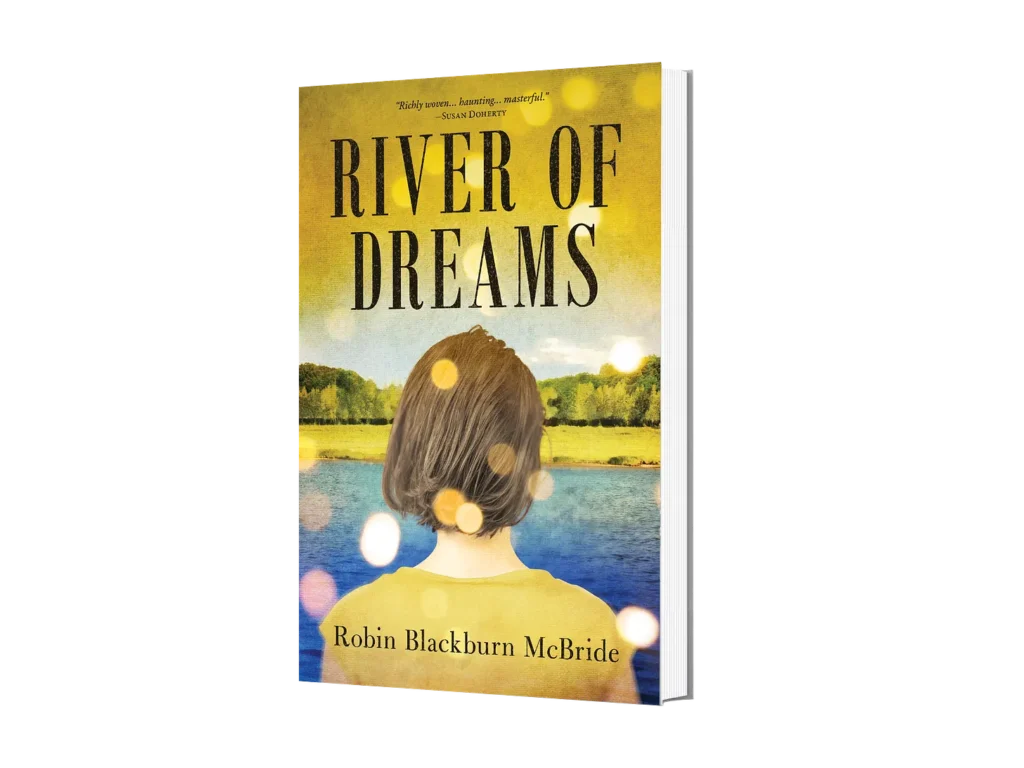
Expect my next letter on Friday, April 17th when I’ll share on the book itself. In the meantime, let me know what you think of the cover!
As always, thank you for being here.
With love,
Robin