A Few Thoughts on the Otherworldly
Dear Fellow Dreamer,
Happy May Day.
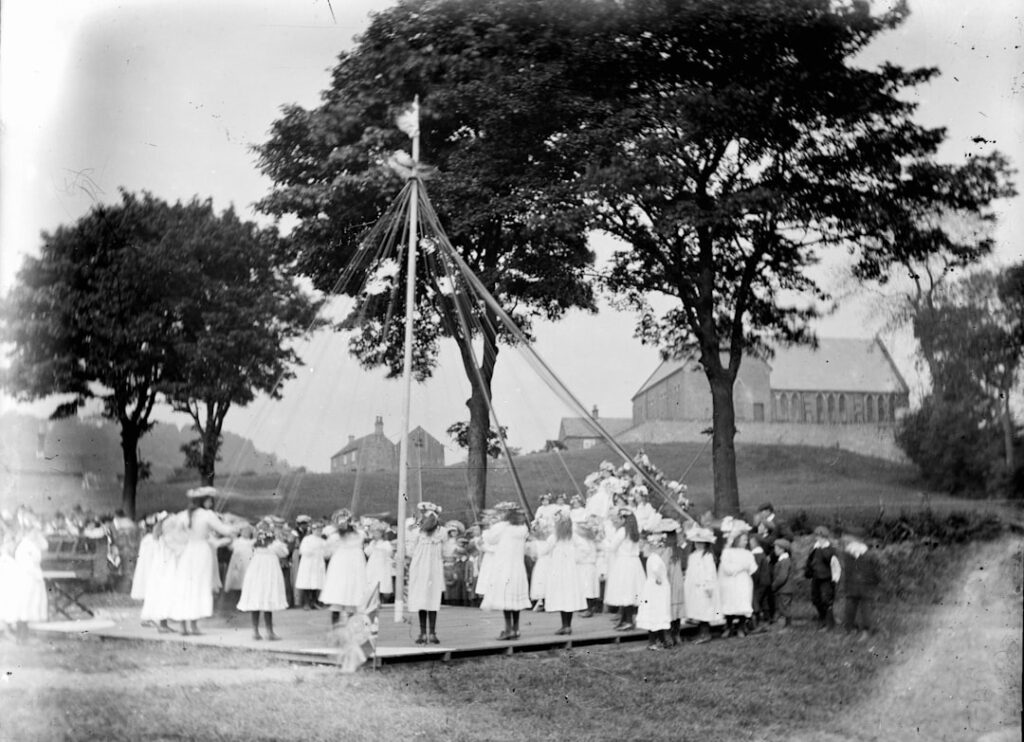
Beltane, meaning “bright fire,” is an ancient Gaelic festival any of us can celebrate to mark the halfway point between the spring equinox and summer solstice. In the old countries of my ancestors, it’s now that the season moves from spring into summer. (Though not quite so here in western Québec, where the nighttime temperature may occasionally still touch zero, and the crocuses have barely finished blooming.) Beltane has ancient associations with fertility—both of the land and its flora and fauna, and of us human folk. Traditionally, this is a period when many people seek blessings for marriage and passion, and also for prosperity. Of course, to prosper doesn’t just mean to be materially well off, but to experience health and well being. A feeling of mental and spiritual alignment with one’s soul.
This moment of the year has another dimension, too. In a brief summary I came across online, Beltane is described as “the Otherworld time.” One in which, historically, “it was believed that the boundary between the human and supernatural worlds was thin…”
Two words in that unattributable description make me curious: “was” and “supernatural.”
Written in the past tense, the first word causes me to wonder how many of us regard the belief in liminality to be a thing of bygone eras, back when people were “superstitious”? And conversely, how many of us still hold the belief—perhaps through our own lived experience of sensing and intuition—that this stretch of the year is, indeed, a threshold time? In our present-day world, to what extent might “was” be “is”?
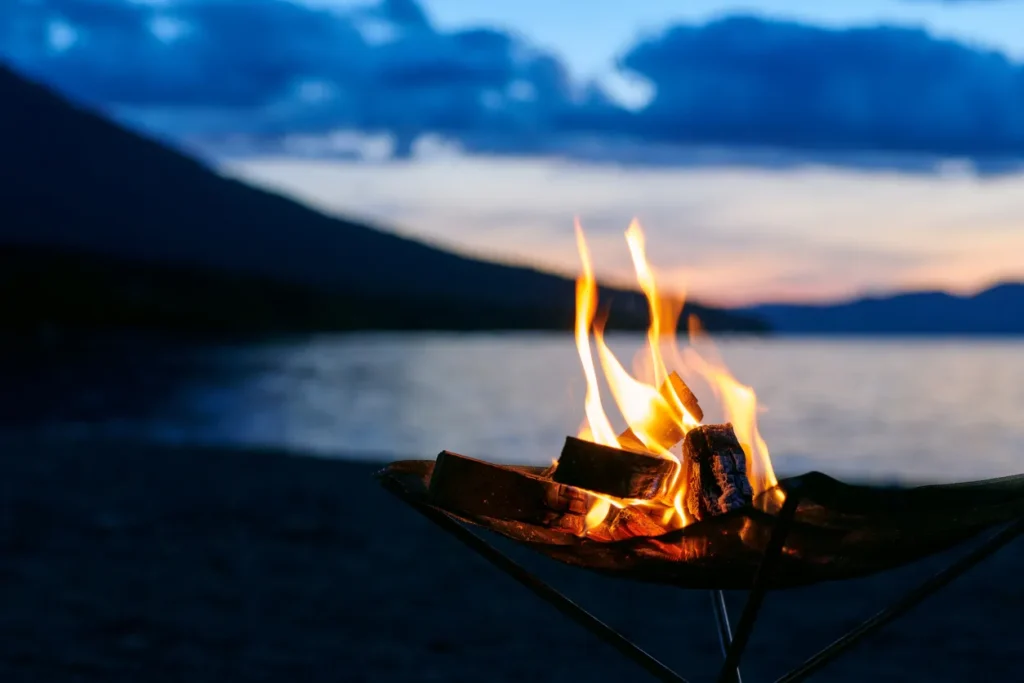
Yet we live in a mainstream culture that doesn’t encourage the cultivation of intuition, highly attuned environmental awareness or sensing, or what psychologist Carl Jung called the Active Imagination. Collectively, if we were to honour and develop such capacities, perhaps more of us would have a sense of liminality—that is, a heightened experience of connection with things seen and unseen by our physical eyes—all year round. Nonetheless, for the most part, we are not a dreaming society. Might that ever change?
In contrast to the children of our modern-day world, on the lands where my ancestors settled, and specifically here, on the unceded and unsurrendered territory of the Algonquin Anishinaabe people where I now live, following Indigenous tradition, an Anishinaabe child might have their first vision—a journey for revealed knowledge—at age six or seven. One of my favourite books on the subject of Indigenous culture is D’Arcy Rheault’s Anishinaabe Mino-Bimaadiziwin (The Way of a Good Life): An Examination of Anishinaabe Philosophy, Ethics and Traditional Knowledge (Debwewin Press, 1999). In this scholarly book, Rheault quotes elder Joseph Couture (Cree/Métis) on the subject of “Aboriginal ‘knowing’”:
“In the old days, our people had no education. They could not learn from books or teachers. All their wisdom and knowledge came to them in dreams. They tested their dream, and in that way learned their own strength…
“A corollary to the issue of ‘knowing’ is that of mysticism. From a Native spiritual standpoint, as I see it, mysticism is a question of becoming/being rooted or grounded in relationships with all constituents or dimensions of reality.”
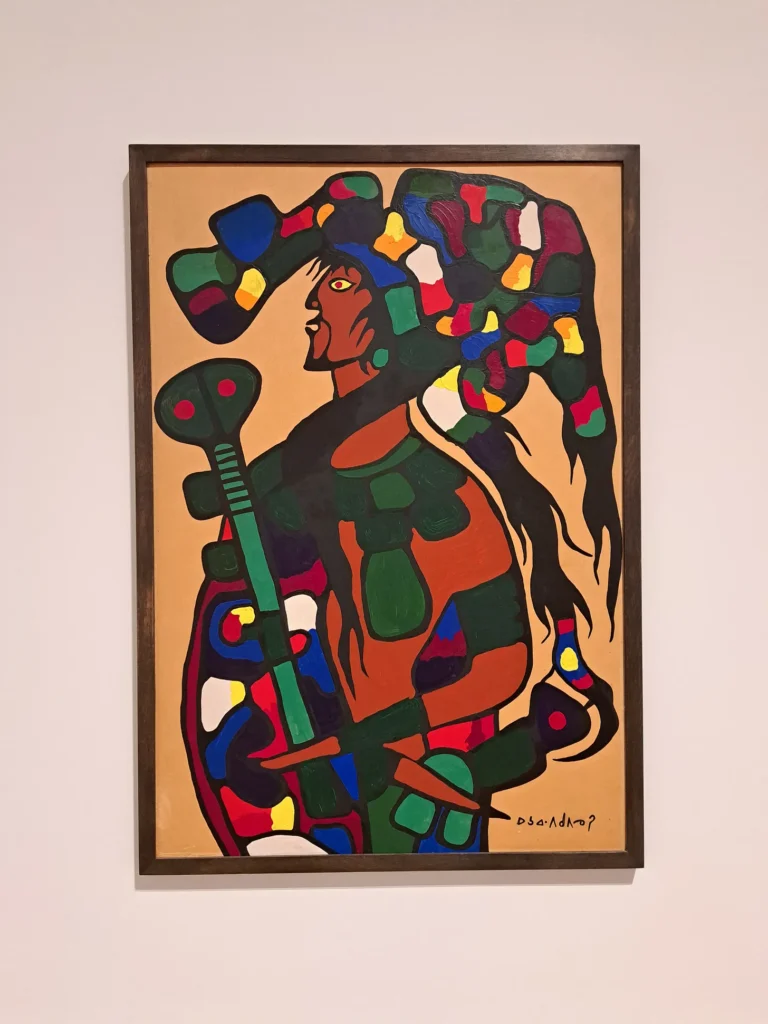
The idea that a dreamer embarks on a journey to gain insight, information, and spiritual helpers, to exercise a metaphysical muscle, is not vastly different from shamanic traditions in other cultures and parts of the world. Mythologies and systems of thought differ, but the act of dreaming for revealed knowledge is similar.
If you know me, you’ll know that much of my life has been spent in offroad learning. Investigations into our ability to dream and apprehend reality in ways often rejected by the mainstream.
As a writer, I like to keep certain questions alive—ones a child naturally asks and explores. What is this place? What can we do, and know, and experience by means of our own willingness to imagine and intuit? To dream?
The second word I’d like to consider from the Beltane description is “supernatural.” Among those of us who study dreams, and shamanism, and traditional, alternative life ways, it’s a contentious term because it can suggest that otherworldly or uncanny phenomena are somehow beyond the realm of nature. Critics of the word argue that just because we don’t fully understand something doesn’t mean it’s not natural. Cue Shakespeare and a famous line from Hamlet to his friend: “There are more things in heaven and earth, Horatio, than are dreamt of in your philosophy.” Teachers bridging the worlds of science and metaphysics often prefer words such as “supernormal” to describe phenomena as yet unexplained by science. Increasingly, the term “non-ordinary reality” is recognized as a viable descriptor of dreams, visions, and other threshold experiences.
Yet I’ve sat with the word “supernatural” for a long time, contemplating why, as a fiction author, I still love it. Because I do.
The answer comes through memory—my personal associations with the term, and also more significantly, through literary tradition. Specifically, the ghost story.
Merriam-Webster defines supernatural as 1) “of or relating to an order of existence beyond the visible observable universe…”; and 2 a) “departing from what is usual or normal especially so as to appear to transcend the laws of nature,” as well as 2 b) “attributed to an invisible agent (such as a ghost or spirit).” As you can see, a key operative word is “appear.” To appear to transcend the laws of nature is not the same thing as to transcend them.
Unlike the terms “supernormal” and “non-ordinary reality” (both valid and precise), for me, “supernatural” carries a charge. It’s an electric word that serves as a sign—one pointing to experiences that bring shivers and a sense of mystery.
Would most shamanic practitioners favour the word supernatural over supernormal? No. Probably not. But since I walk, not only in the world of shamanic study and practice, but also in that of ghostly fiction writing, I’m fine with my new novel River of Dreams being described as supernatural. It’s a work of imagination. And yes, it has things to say. As a storyteller, I believe life’s mysteries awaken wonder, and that it’s important to keep an open mind. I love questions that edge along the borderlands of awe: Is there a part of us that lives on more than one plane of existence at once? Where do we go when we dream? When we die? What unseen forces may be guiding us? I believe many people love ghost stories because they remind us of the mystery in which we live.
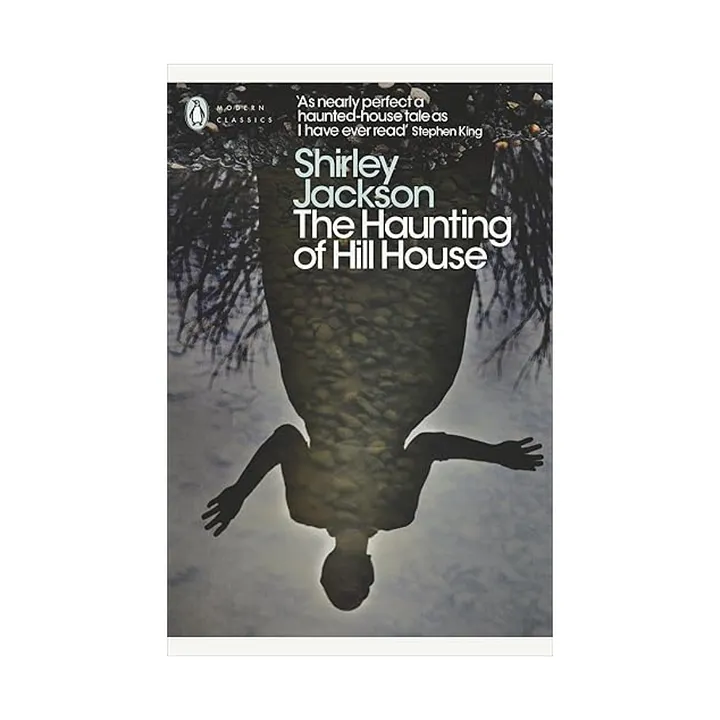
When I was a child and we visited my grandparents’ old house in Stratford, Ontario, an architecturally Victorian city, two ghostly tales were among my favourites. The first was Uncle Dave’s “girl in the window” story—one my cousin Carole and I begged him to repeat, especially on nights when I slept over at her home a few blocks away from our grandmother’s. Uncle Dave, Carole’s father, knew how to tell a story. He did the voices and whistly sound effects. He made his eyes bulge and leaned in close to us on the long pauses. Staring through the darkness at the vacant house across the street, we followed his narrative, picturing the girl who haunted the attic because her father had bricked her in, and she’d died in that room. (“Yes, he’d sealed up the door.”) Occasionally, if one of us were to glance at a certain angle, in a certain moment, she might appear with a candle in the window. At least, that’s what Uncle Dave said. On certain nights, we might even hear her thin wail. But did we?
Maybe the scared part in a child is very old—a part born knowing that it’s possible for young people to die in terrible ways. Years later, while studying children’s literature in the early 1990s, I learned of Iona and Peter Opie’s research into nursery rhymes, including “London Bridge.” The professor raised the notion that the bones of at least one centuries-ago child had been found implanted in an old bridge foundation somewhere in the UK—a child presumably sacrificed and placed there for protection. Perhaps a reminder not to become overly enamoured of our notions of the “Old Ways.” While I haven’t yet found much solid research on the subject, I did come across an article on immurement, a medieval practice of punishment and also sacrifice, “when a person is encased into a room with no openings or exits…” If you enjoy going down research rabbit holes, as I do, check out another piece on rivers and child sacrifice here. You may also wish to check the article’s source, Chris Roberts’ Heavy Words Lightly Thrown: The Reason Behind the Rhyme.
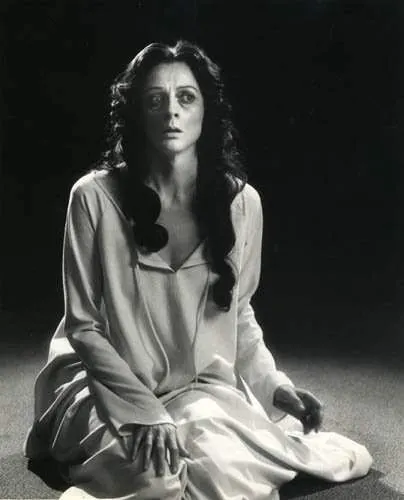
My two other memories of the empty house across from my cousin’s place were, first, of tobogganing with Carole down its small front hill—not a ghostly girl’s thin wail to be heard. Just our giggles. And second, a few years later, learning that British actress Maggie Smith and her family had moved into the old dwelling after she’d signed on for several seasons at the Stratford Festival. Yes. For a moment in time (1976 – 1980), Maggie Smith, who would one day inhabit the roles of Harry Potter’s Minerva McGonagall and Downton Abbey’s Violet Crawley, came to live in the very house that had disturbed my sleep. By then, I was an adolescent. Watching Smith’s performance as Lady Macbeth—a fiery-haired enchantress still emblazoned on my mind—was an experience more satisfyingly eerie than the fading story of the girl in the attic. To my Uncle Dave’s credit, though, both spooky performances—his and hers—had their time and place.
The ghost story our grandmother told us was different from Uncle Dave’s, since reputedly it was “real.” Her tale was also situated in a neighbour’s old house, one belonging to another Festival actor—a man who spoke freely about the goings on inside. Carole and I often asked Gram to give us details from conversations with him. How he and his wife would be standing in the kitchen washing the dishes, and then suddenly feel an icy drop in temperature beside them. Not a draft, but a concentrated zone of cold. How the dogs would only go halfway up the stairs, where they stopped, fur standing on end. Barking and growling. Those were accounts I’d later keep in mind, during my own uncanny experiences.
Delivered evenly, without sensationalized details, Gram’s story was the one that made me most curious, because the people in that house stood by their claims. While Gram wasn’t casual in her telling, she was direct. Matter-of-fact. In the same way, one time when I was in my teens, she was direct in telling me that she could read tea leaves. And just like that, I was sipping the clear darkness, and swirling it, and we were turning the cup. Gram’s ghostly storytelling and her tea reading were offered in private, away from the men. Or at least, away from those who would judge.
Since the main character of my new novel is a seer, the next time I write to you I’ll share more on the ever-contentious topic of psychic phenomena, including “fortune tellers,” the memoir of a twentieth-century clairvoyant, and a few thoughts on telepathic communication. Look for that letter from me towards the end of the month.
In the meantime, if you enjoy considerations of unusual occurrences and seasonal musings, here are a few related Substack articles I recommend:
- Cathy Jacob’s article, “You Can’t Love What You Don’t Notice,” is one in which she recounts visiting a fortune teller who helped her to find and cherish her (now) longtime romantic partner. At The Slow Sip, Cathy delivers life lessons with earned wisdom and a bang-on sense of humour. She is also a fine poet.
- Lyns McCracken’s “The Bell and the Fog: Part I” marks the start of a new season of the Spooklit Podcast. Lyns is a wonderful resource on things ghostly. Check out her artistry at dreary dendrophile where she depicts her own adventures in the unknown. Her photos are, well, out of this world. Lyns also curates and reads classic ghost stories.
- Rupert Sheldrake is a Harvard scholar who has worked as a biochemist at Cambridge University. Controversial for his findings as a parapsychology researcher, Sheldrake has spent decades bridging the worlds of metaphysical investigation and science. In “Making Sense of the Resurrection of the Body,” he discusses multi-sensory visitations by departed loved ones as being quite common and distinct from ghosts or hauntings.
- If the subject of visitations by departed loved ones speaks to you, I also recommend reading Simone Senisin’s work at Grief, Gratitude, Love & Laughter. In her latest piece, “The Intimacy in our Vulnerability,” she shares her experiences of connection with her now deceased partner, John. Recounting memories of his physical decline reveals how that process brought them closer.
- If you would like to learn more about Beltane from someone committed to imparting traditional earth-centred healing ways, I recommend Julie Schmidt’s article “Beltane: The Embodied Yes, Where the Heart Blooms.” Here she tells the story of the Welsh mythological figure Rhiannon who “first appears riding a mysterious white horse from the otherworld.” An uplifting read.
Finally, in the tradition of works both literary and supernatural, I’ll leave you with a memento of Dame Maggie’s Lady M.
Have a wonderful May!
With love,
Robin
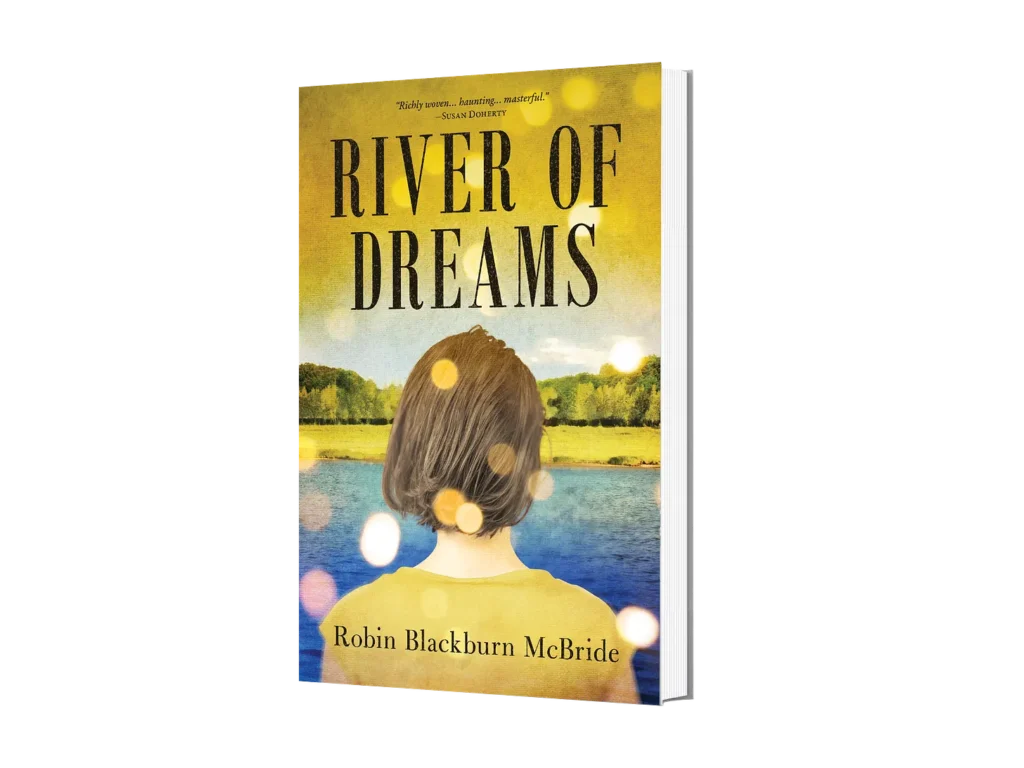
“Caught between her calling and society’s expectations… A haunting exploration of the fine line between genius and madness, and the courage it takes to embrace the extraordinary…”
—Susan Doherty, award-winning author of The Ghost Garden and Monday Rent Boy
River of Dreams is now available for pre-order. Books need early supporters. The novel will be released on October 1st, but pre-orders as early as now do a lot to help increase a new book’s visibility. I hope you’ll consider supporting this work by pre-ordering a copy today.
What’s Ahead:
Magic Animals Writing Gatherings
The second of three online writers’ circles will soon take place at Awakening Wonder. These spring gatherings are included among various gifts to Annual paid subscribers. You don’t have to have attended the first gathering in order to join us for the second or third, or both.
Our circles follow a simple structure, with much time to explore and write. The first one was fun and inspiring, with some intriguing occurrences.
Details:
We’ll meet via Zoom on the following two Sundays: April 26th and May 31st, from 1 – 4:00 p.m. Eastern. Our emphasis is on exploring story through guided drum journeying, with spacious silent time for writing, followed by (optional) group sharing.
In these generative sessions, our focus is experiential. And of course, the ideas sparked and developed during our time together may be expressed through any genre. Story fragments may arrive unexpectedly. Others may come in response to seeking solutions for a current work in progress.
If the upcoming event resonates, I’d love for you to be part of it. Please RSVP before next Wednesday, April 22nd (Earth Day) so that I can send you more information to help you prepare, including the Zoom info.