How to Welcome Inspiration
Are you a passionate creator? Often when a project succeeds it begins with a creator’s burning desire. Passion (some would call it obsession) needs to be present in the process and reignited the whole way through. But what happens when we don’t always “feel it”? What about the days when we’re not on fire, but show up anyway? To our work. Our dream.
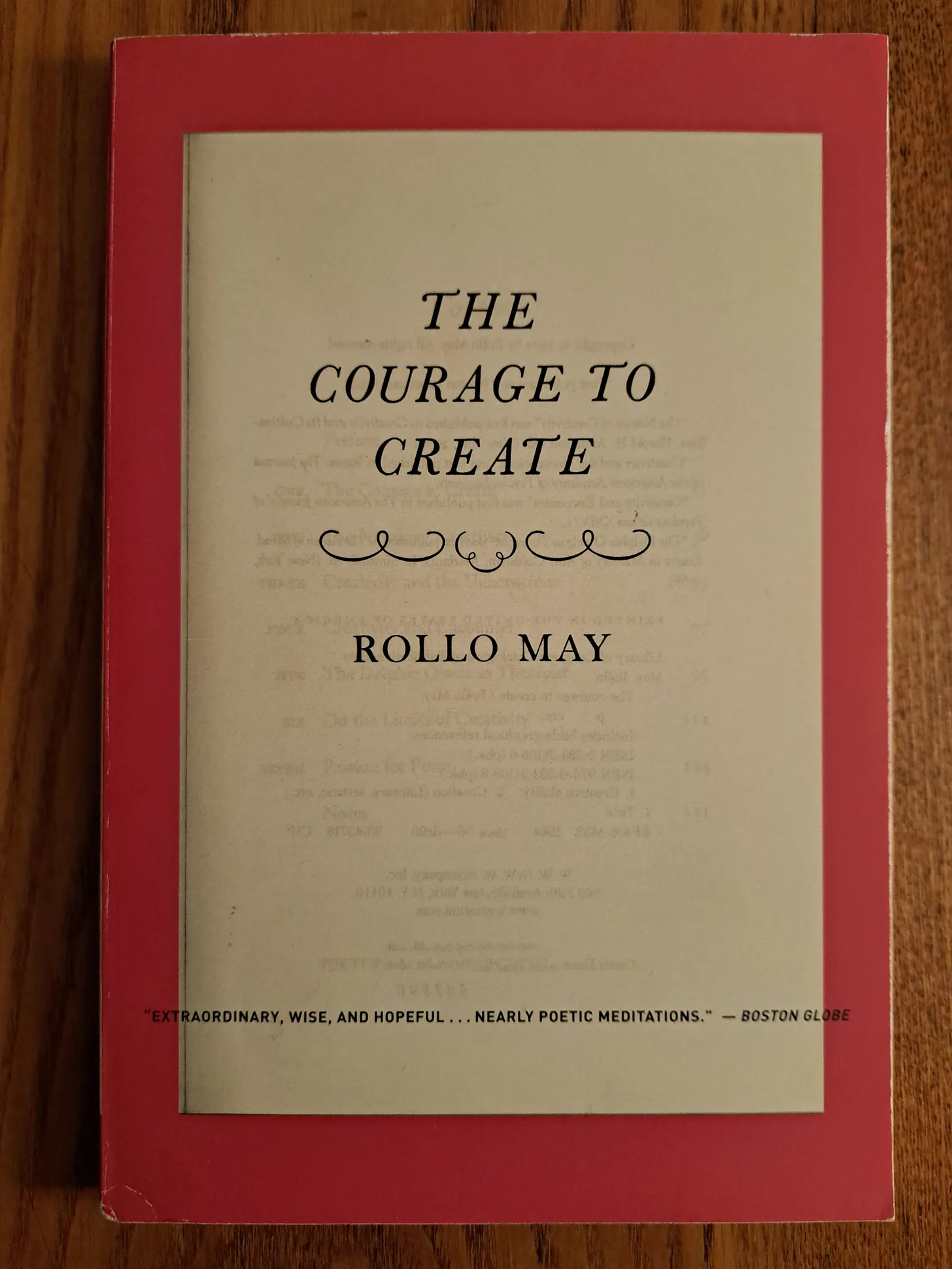
I like Rollo May’s definition of passion in the creative process. In his book, The Courage to Create, May describes passion as the degree of intensity in an encounter between some aspect of the world and the artist’s awareness. Moreover, passion is not the quantity of emotion, says May, but the quality of commitment.
I find that idea reassuring, since emotions are changeable and can be difficult to summon on demand. My prerequisite for writing has never been feeling inspired, or any other emotion. If it were, I’d never have finished a single book.
But an intense commitment to the creative process? That I can sign up for, and do—again and again.
Setting a clear intention to “receive” a story, or an aspect of a story, and to stay with it, knowing full well all the ways it may be challenging and difficult to bring into form, also means trusting in what the process will reveal—by means of our commitment. Our perseverance. Because we can’t see the whole picture at the beginning. Only by taking steps, with no guarantee of anything, do we find our answers. An artist friend and colleague of mine used to say that art is a series of problems to be solved.
It begins with a commitment to vision.
As creators, that means opening ourselves to what May calls “encounter.” Ultimately, what we celebrate—the greatness of a poem, novel, painting, etc.—”is not that it portrays the thing observed or experienced,” writes May, “but that it portrays the artist’s or the poet’s vision cued off by his encounter with reality.”
As writers and artists, we need a certain kind of “nimbleness, a fine-honed sensitivity in order to let one’s self be the vehicle of whatever vision may emerge.” Furthermore, May emphasizes, the crucial practice of being receptive is not the same as being passive.
All of that prompts me to reflect on the yin-yang nature of creativity. With clarity of purpose and commitment, I believe that we all have the potential to be receiving and transmitting stations for inspired ideas.
Being a Receiver
When I’m writing fiction, sometimes I take myself on vision walks. I listen to the birds and gaze at the trees. Or at the sidewalk, forest path, or pot-holed shoulder of suburban road. For many well-researched reasons, walks not only clear our heads but help us to receive fresh insights. Years ago, I wrote a four-part blog series on the creative benefits of walking. It’s packed full of tips and links, and you can find it here.
Removing the pressure of having to accomplish anything other than allowing snippets of ideas, scenes, and story structures to come through me will often spark ideas. And of course, I reassure myself it’s okay if nothing comes. Sometimes, during a walk, nothing does. But later, feeling the effects of having traipsed around the neighbourhood, I’m never surprised when a sparkly, new jewel of an idea drops in.
While strolling, I usually carry a little notebook for jotting my thoughts. Or I speak into the voice recorder on my phone. Entire dialogues between characters have come to me that way. For example, that’s how the initial meeting between the characters of Avery and Leif revealed itself when I was drafting River of Dreams. Eventually, a couple of years before the book was finished, I adapted their first chapter together into a short story called “The Berries,” which was later published in the Canadian literary magazine, flo. I love it when characters—so distinctive and seemingly self-possessed—declare themselves like that. (River of Dreams will be published by Guernica Editions in 2026.)
When I was drafting The Shining Fragments, I walked the streets of Toronto—through every neighbourhood and haunt where my character Joseph wanders in his late 19th-century world. And I walked the green fields of County Armagh, Northern Ireland, too, since—like some of my ancestors—my central character comes from that place.
However, while writing The Shining Fragments, the character of Deary Avery didn’t come to me on any walk. No. She cartwheeled into my mind one day as I sat “drafting” in the dining room of the small upper flat where I lived with my daughter. Relaxed, I wasn’t moving my pen, but staring through a window at a brick wall. That brings to mind one of my favourite of Emerson’s lines, that “every wall is a gate.” If any of my characters could find a gate in a wall and do a backflip through it, that’s Deary.
What about you? Do you have a process for receiving ideas? Do you have an uncanny story of a time when an idea came to you and became something substantial? A vision realized? Please write in the comments. I’d love to know about your experiences.
Beyond Books
In The Courage to Create, Rollo May’s chapter, “Creativity and Encounter,” also caused me to ask myself—what qualities do we need as good readers? As attuned viewers and listeners? Readers of literature, yes. Of all the arts. And at the same time, most essentially, of ourselves, each other, and the world.
I choose to think that we all have the potential to be readers of dreams and signs—of what the Aborigines of Australia call “the speaking land.” As intuitive meaning-makers, cued to receive and reflect, aren’t we prompted, each day, to take an active part in an ongoing co-creative process? To do so with awareness? To be artists of our own life?
Have you read a book or experienced a work of art that forever changed you? I hope you’ll join in the conversation.