The Second of Two Letters on Growing a Dream
Have you ever experienced a series of “meaningful coincidences”? In this letter, I’ll touch upon synchronicities, a term coined by Swiss psychologist, Carl Jung. The examples I’ll share come from my early writing adventures. Synchronicities are events that seem related, yet uncanny, because their causes defy rational explanation. We learn to recognize them each time something happens that feels like more than a mere coincidence. We get to know synchronicities by our shivers.
DREAM-BUILDING KEY #1: KNOW WHAT INTERESTS YOU AND FOLLOW IT
Last week I presented a case study of starting a novel in the summer of 2002. Because I’d kept detailed journals, I was able to look back and see how I’d freely explored my interests in dreams, art, collage-making, poetry, memoir writing, etc., before identifying the work I most longed to pursue. By the end of that summer, my growing interest in the character of a orphaned boy named Joseph Conlon coming to Canada from the north of Ireland in 1882 had become the catalyst for inspired action-taking.
A Few Thoughts on Being Gripped by a Vision
At a recent Ottawa book fair, I found myself chatting with a local poet who’d made peace with knowing he’d never write a novel, adding, “It must become a psychological obsession.” Was he looking at me like I was crazy? I have to laugh. It depends on your definition of crazy, I guess. While beginning that project, I was seeing a therapist. At one point I asked him, “Is this an obsession?” His answer has stayed with me ever since. “In the case of your creativity—something that gives you energy and isn’t harming you or anyone else—call it a passion.”
So, a meaningful passion was emerging in me during the fall of 2002, once I was back at school teaching. And while keeping my balance, my boundaries, and my health, I continued to stoke the proverbial fire under that passion by researching and writing short scenes. The Ulster child who’d come to visit me in my dreams was beginning to feel real. So much so, that once, while sitting with a clairvoyant having a psychic reading at Toronto’s Omega Centre (my wont in those days), as she began by studying my face, the reader said, “I see you have a girl,” and added, “—two children?”
“No. One girl.”
She scratched her head. “So—who’s this boy I’m seeing with you?”
That brings me to the next key to successfully growing and building a dream.
DREAM-BUILDING KEY #2: ATTENTION
Knowing what genuinely interests you is the first phase of any dream-build. But it’s not enough to effect the changes, growth, and results you seek. If you truly desire to bring your vision into form, then you have to learn to stay focused on what interests you. That means directing and redirecting your attention back to the project you love.
It’s easier said than done. How many of us have been inspired to begin new works, only to let them slip away due to distractions? Such dream-ending diversions may include the legitimate and practical concerns of the moment, if not kept in check. Or perhaps discouraging remarks from well-meaning people turn into blocks. Our friends and family may fear we’ll be disappointed and try to talk us out of our dreams. Specialists in our field may be unskillful in communicating criticism. I have more to say on that subject in upcoming letters to you. But for now, just know that in the past, during the days when (despite appearances) I lacked belief in myself as an artist—and long before I’d become a coach in transformation—I lost projects. Lots of them.
But not this time.
In my last letter, I used the word “potency” to describe the energy that builds when we train ourselves to show up in service of our vision. Call it an obsession, a passion, a burning desire. You must allow yourself to love your genuine interest so much that you keep bringing your attention back to it and taking action.
What follows are a few selected “snapshots” of focused attention in my case study.
Haunting Libraries
Growing up, I loved history. A more than casual interest in Toronto’s past led me to become an historical interpreter at one of the city’s oldest houses when I was fifteen. It was my first job with a pay cheque. Beyond that, historical walks, programs, novels, and theatre have always been “a thing” with me. But the character of Joseph was leading me to do more kinds of research. I spent untallied hours at the Toronto Reference Library reading Victorian-era newspapers on microfiche. I found myself photocopying fire insurance maps of the city and ordering rare books on a variety of subjects, including the late 19th-century lives of Irish Catholic immigrants in Canada.
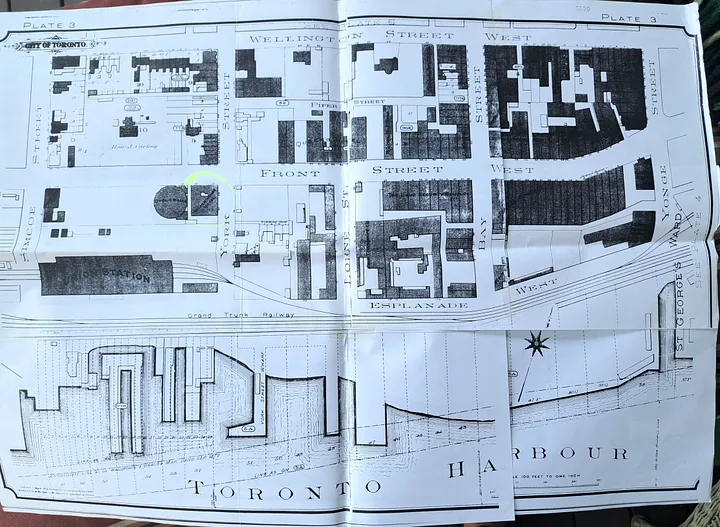
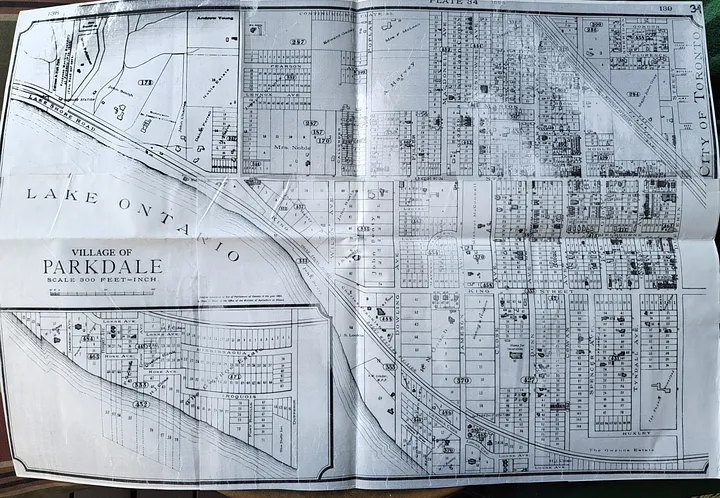
At the same time, my desire to go to school on the church-window trade was taking me beyond libraries.
Interviewing a Master
One day, with my guts in a knot, I picked up the phone and called the head of one of the oldest companies in the city, renowned stained-glass maker, Andrew McCausland. I told him I’d been an admirer of his family’s work, and about my project (at that point, ragged journal scribblings, heaps of photocopies, and the odd rough scene). I spoke the words, “I’m writing a novel.” (“Sure you are,” cackled the voice in my head.) I talked about the main character who was an artist. A stained-glass painter. And I wondered if someone at McCausland’s shop might be able to help me learn about the process of creating church windows.
Not only did Andrew McCausland invite me to visit his five-generation stained-glass business in Toronto’s west end, but to my delight and everlasting gratitude, he took me on a tour of the city, showing me many windows, and telling me stories of his family.
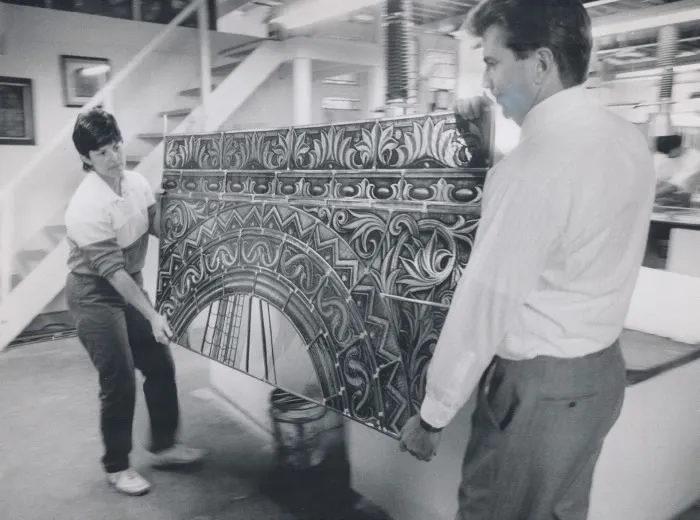
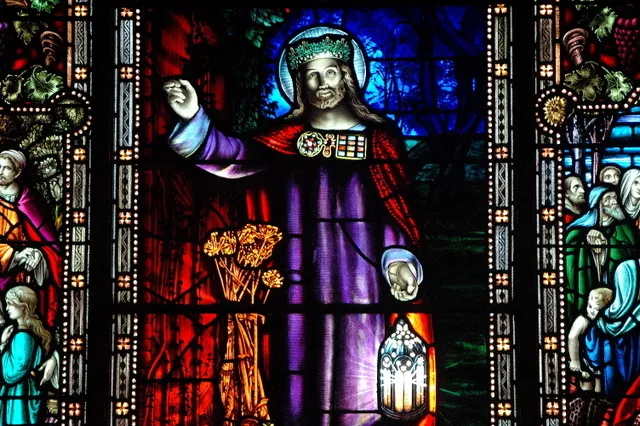
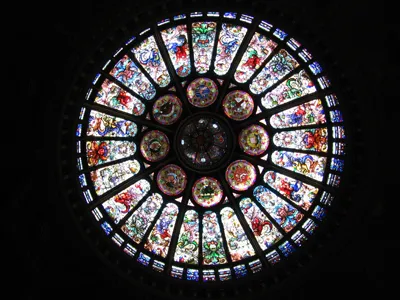
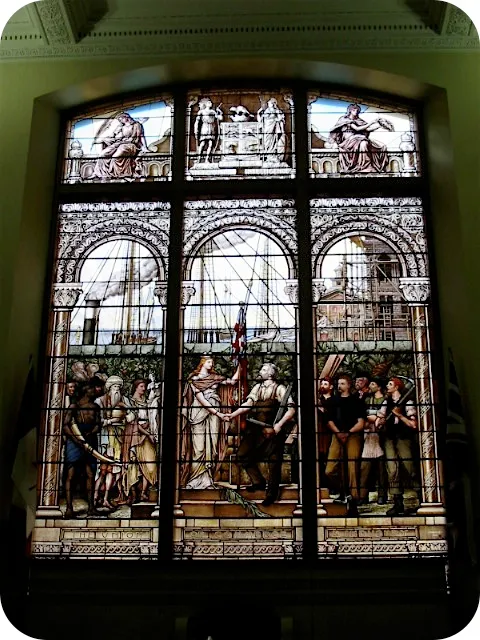
Visiting with McCausland, both at his shop and on our tour of city landmarks, was crucial to my project for two reasons. First, I received more ideas for the book, including a much clearer vision of the family of glass painters I decided to base loosely (with permission) on the late 19th-century McCauslands. Second, the experiences intensified the feeling that my book already existed.
Catholicism for Dummies: Exploring Houses of Charity and an Irish Boy’s First Home
Late in 2002, I also visited Sister Veronica O’Reilly of the Sisters of St. Joseph and learned something of the Irish Catholic community in Victorian Toronto. In particular, we discussed the city’s early charitable institutions. She gave me a book about Irish-Canadian orphans of that period. She also gave me the names of scholars, including Murray Nicholson, whose articles delivered vital insights into early Irish immigrant culture, exposing the extreme degree of anti-Catholic bigotry.
Not having been raised Roman Catholic, I found my conversations with O’Reilly helpful. (And yes, I really did buy and read a book called Catholicism for Dummies.) Over the years, I would return several times to the sisters, eventually meeting with their archivist, Linda Wicks. I decided to name the order of nuns in my novel the Sisters of Our Lady of Mercy, not the Sisters of St. Joseph, making it clear they were fictitious characters.
As I researched Catholic Toronto, I began thinking of the place that Andrew McCausland had talked about during our walk in the Mount Pleasant Cemetery: Armagh, both the city and county in Northern Ireland. The name was giving me goosebumps.
By now, early in 2003, I searched the Internet for books on the area and ordered the only one I could find—Armagh: City of Light and Learning—which arrived at our small apartment from across the sea. The seat of both the Catholic and Protestant Churches, Armagh is also a place of apple trees and linen mills. Ghost mills, now. I read about Navan Fort at the city’s edge, a pre-Christian ceremonial mound and the mythic seat of the Red Branch Knights.
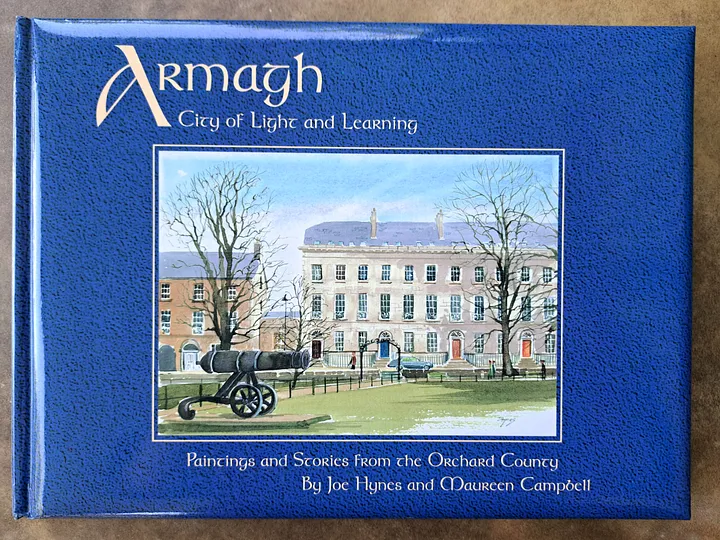
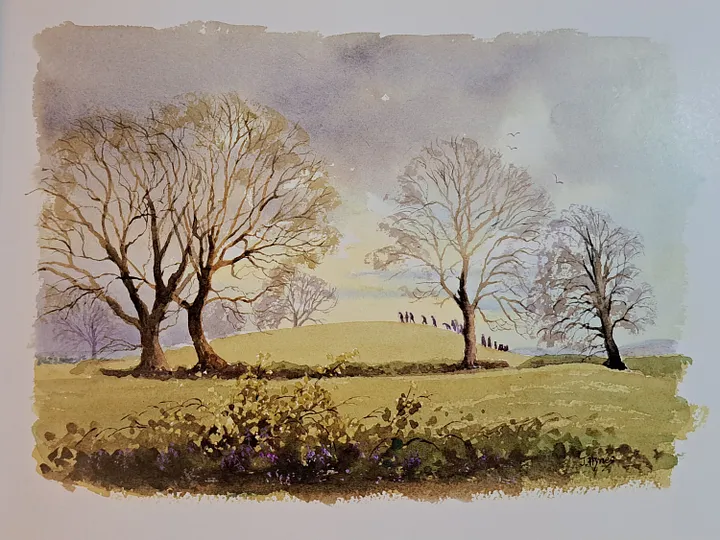
And I started imagining those places and jotting more short scenes from Joseph’s childhood, picturing him in Darkley—a hamlet close to the town of Keady, a few miles from Armagh City.
Years after writing the book I would discover that some of my own ancestors had come from Armagh.
More goosebumps.
Mapping the Passage
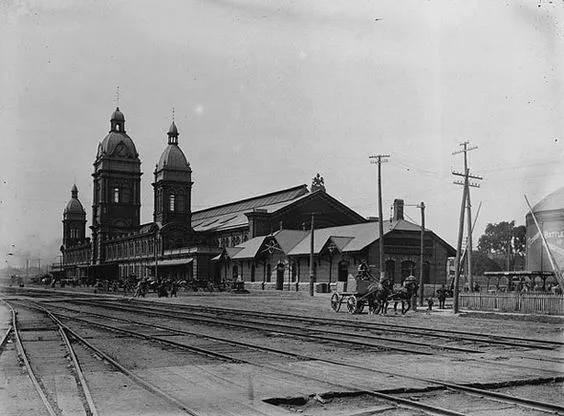
My next step in pouring attention on the project, was to figure out how Joseph’s family would have come to Canada. I knew the answer roughly—by ship, of course. But what kind of ship? And what route? Eight-year-old Joseph, his mother Nora, and his tiny sister Colleen begin their journey from the middle of the island. How would they have travelled over land? To which port? And what would that experience have been like?
A Rare Move
It’s unusual for me to discuss what I’m writing with friends and family before a project’s done. But in the winter of 2003, for some reason, I started talking about the work with my father. When I got to the part about being stumped as to the route, he blurted— “Maurice. You have to talk to my friend Maurice. He’ll know.”
It turned out that Dad’s friend, the superintendent of the Toronto apartment building where my father and his wife lived, was also a serious amateur historian specializing in 19th– and 20th-century travel by rail and ship. Oh, and one more thing. Maurice Batley and his wife Joan had emigrated to Canada decades earlier, from Belfast. He was a Northern Irishman.
Why had I done that? Taken the risk to share my creative process with my father? So completely out of character for me! Yet as a result, there it was. My next step.
In Maurice, I met someone as passionate and attentive to his field of interest as I was to mine. He went to work on the research immediately, finding the answers and sending me fourteen handwritten pages detailing the route.
Now I had several early scenes drafted, including a well researched and plausible way of getting Joseph and his family across the sea.
Of course, I still had Toronto streets to walk, maps and books to study, interviews and field trips with other specialists to arrange, and local archives to visit.
But what I most yearned for was to go to the place where Joseph had come from. I wanted to take myself across the sea, to the green fields he knew as a child.
To all he’d lose.

That brings me to the third vital element in growing and realizing a dream.
DREAM-BUILDING KEY #3: EXPECTATION
You have to expect your project—all aspects of it—to be realized.
As a descendant of early settlers in Canada, so much of my impulse to explore and tell Joseph’s story came from feeling cut off from my own ancestral lands. The tension of what’s gained and lost in migration had long compelled me.
Yet my desire to go to Northern Ireland? “You must be nuts,” my reasoning mind balked. How could I ever do it? I, a single parent raising my child on a school teacher’s salary. In 2003, I may have been rich in imagination, but in the financial domain of my life, I felt broke.
Yet something was changing. I could sense it. As I kept working on the research and sketching scenes, I imagined myself going to my character’s homeland—the same place where, I’d later discover, not a few, but many of my ancestors had lived.
That’s when I received an invitation from the head of academics at my school, offering me the chance to attend a teachers’ conference in Martigny, Switzerland in late June of 2003. The flights would be paid for.
Could I come back by way of Northern Ireland?
Yes.
A Life-Changing Synchronicity
I’d never had such an opportunity before, and in my remaining decade of teaching at the school, I never received one again. Everything about that invitation sparkled.
Quickly, my mother assured me she’d take care of my daughter, and my father and uncle sent me money to help pay for the trip. Not only that, but when I told Maurice, he said a school friend of his, Roger Weatherup, had been the curator of the Armagh County Museum. Roger would be a contact for me over there. Not in my most extravagant imaginings could I have seen or planned that connection.
Roger and his wife Anne became more than contacts. They became friends. For part of my trip, they hosted me. With his colleague, local historian Trevor Geary, Roger met me at the bus station and took me for tea, and within an hour, I was travelling in Trevor’s hatchback along the narrow roads I’d been visualizing back in Toronto. In Darkley, we visited the home of a bird-boned, bright and ancient woman who’d worked at the mill in the 1920s, and now sat telling me about it. And I found myself walking the fields where Joseph walked, in the story I’d been drafting over 3,000 miles away.
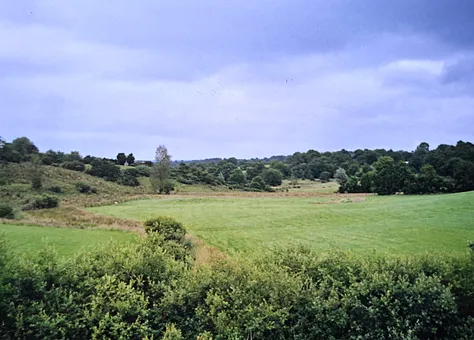
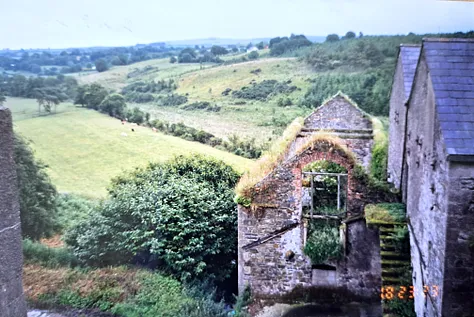
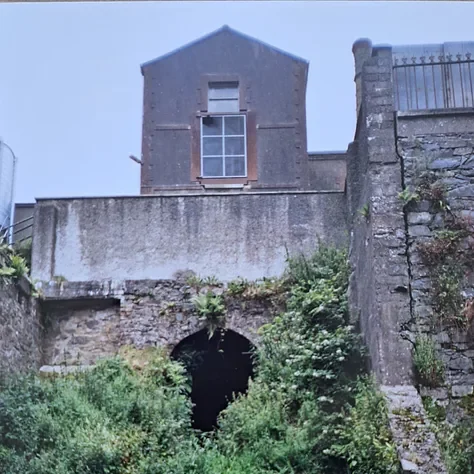
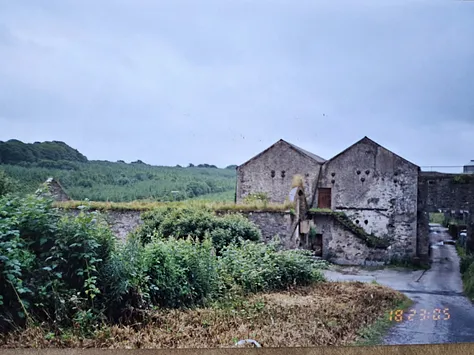
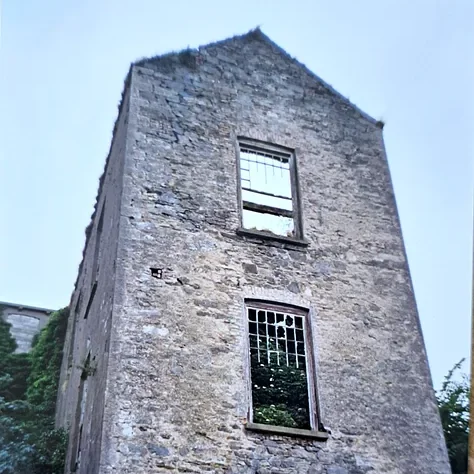
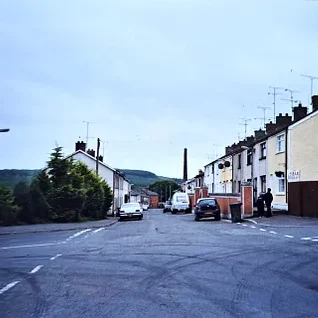
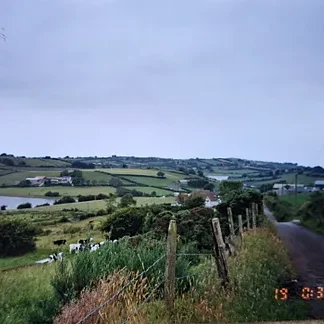
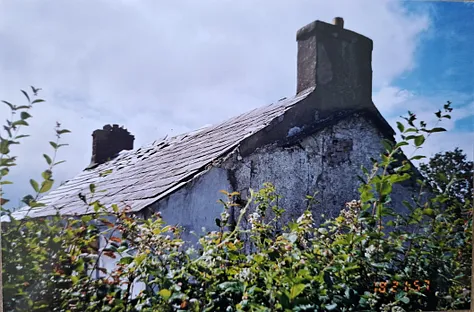
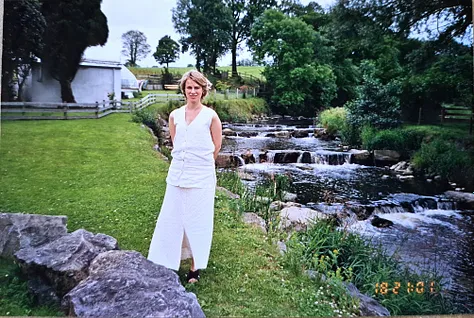
That experience remains high on my list of wondrous synchronicities. Two years later I would return to Armagh and continue my research. Feeling the uplift (and miracle) of immersing myself in Joseph’s land caused me to expect that I really could finish the novel and have it published—no matter how long it took, or how full my life became.
Interest, Attention, and Expectation: A Summing Up
Learning to expect our dreams to come into form helps us to build them. Pouring attention on the actions required for creating what we desire strengthens our faith that we can do it. We grow bolder.
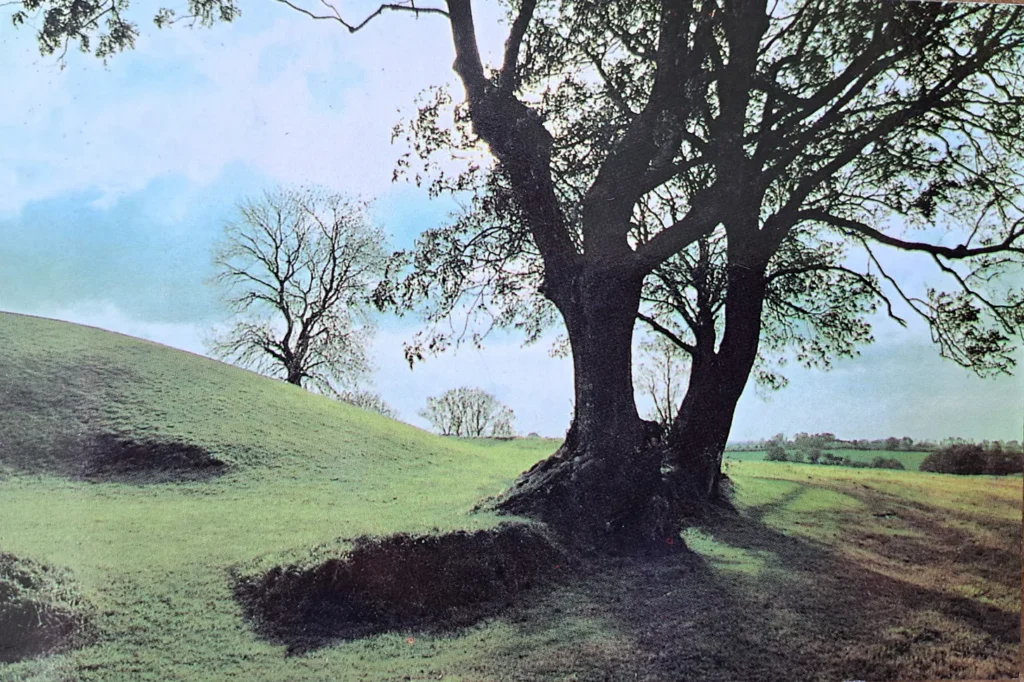
In my creative life, those early experiences of travel and exploration, including the tingles down my arms countless times in Armagh—for example, sitting under a giant ash tree at Navan Fort one twilight in 2005, receiving a vision of how the novel would end—such things helped to reinforce my inner dreamer’s resilience. The emotional charge in the work kept me believing in my project. It also helped me to build a new belief about myself.
I was doing what historical novelists do. Constructing worlds out of research, tactile experience, and heart space. Ultimately, it’s wonderful when our dreams come into form. But the best part is who we become in the process.
Years later, I would finish The Shining Fragments, and like so many other writers, I’d help my book to find a publisher and readers. That first novel received an Editors’ Choice designation in Historical Novels Review. But the end of the process was no more important than the beginning—a long-ago summer of vulnerability and searching. A first winter of being willing to be a little crazy, and passionate, and disciplined. That’s the only way I ever want to write.
What’s Your Dream?
Please share your story. I’d love to know what you’re working on, and any questions or insights this letter may have raised for you. Posting in the comments is a great way to reach me, as well as others who (you never know!) may find synchronicities in what you have to say.
In the meantime, here are a few prompts for reflection and action-taking.
How can you apply what you’ve noticed in my story to your own desires and experiences? Think about your interests—what you love. Think about how you could turn your attention away from the reasons why your project might fail, and put it on taking action for your dream. Then take those next steps, as strange and marvellous as they may seem. As you show up for your vision, begin to note how synchronicities show up, too. Building courage through inspired action-taking will help you to sense how your dream already exists in the invisible. That’s where everything starts. Doing those things is key to learning to expect your dream. The greater the expectation, the greater the momentum.
Notice how you grow in the process.
A Few Final Thoughts on Synchronicity
A book I’m reading and loving these days is Roderick Main’s Jung on Synchronicity and the Paranormal.
If the subjects of synchronicity and the paranormal (or supernormal) intrigue you, let me know that, too. I think you’ll enjoy my forthcoming novel, River of Dreams.