Two Creative Resilience Practices & News
Dear Fellow Dreamer,
So often I share on moments of wonder. But what about those times when it’s nowhere to be found? When we’re feeling lost?
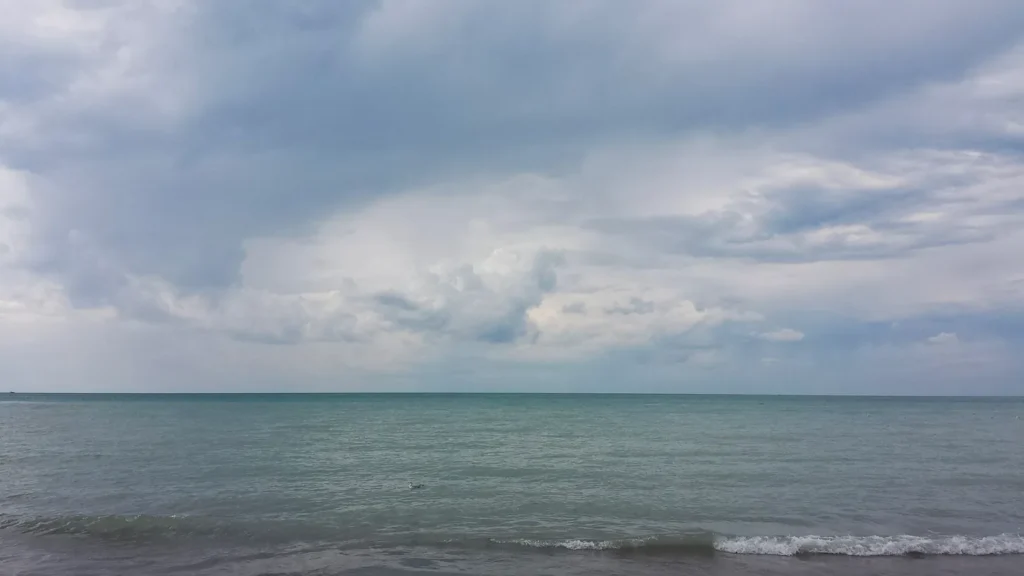
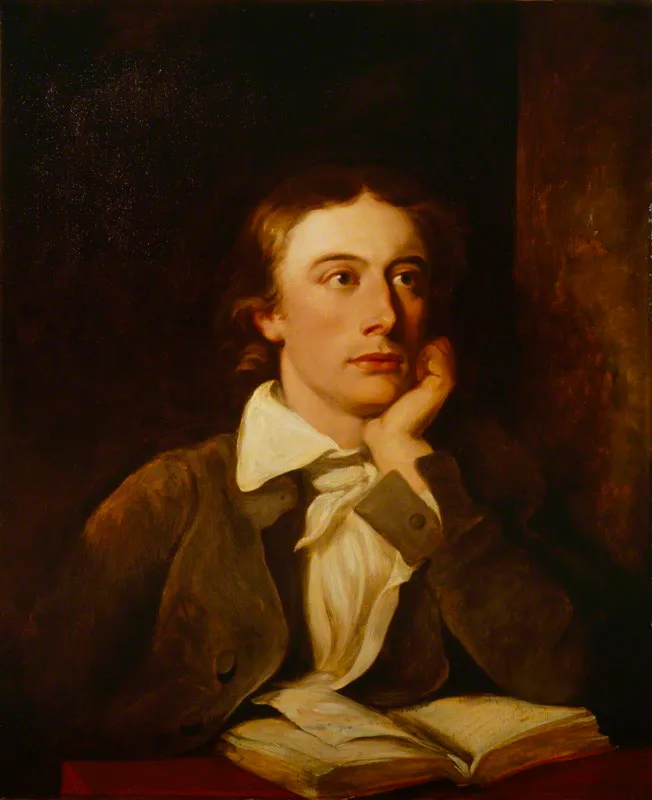
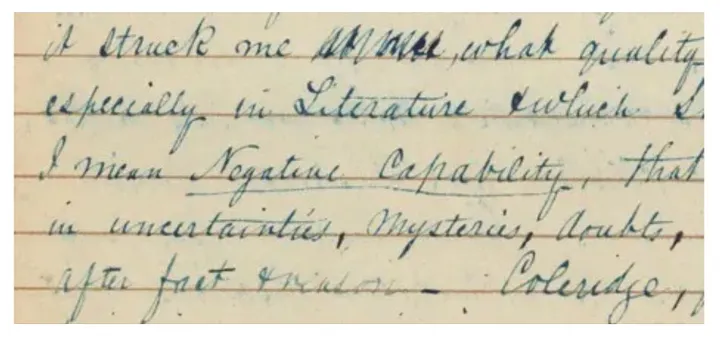
The poet John Keats wrote of “negative capability”—a term he coined for one of the most crucial states and functions of the artist. In pursuing ideals of beauty, even sublimity, Keats suggested that one must be receptive and willing to abide in the unknown, “capable of being in uncertainties, mysteries, doubts, without any irritable reaching after fact and reason.”
Sometimes, the unknown can be a marvellous place. But it can be an unsettling and scary place, too. Especially when we’re devoted to realizing our creations, yet feeling pressure to succeed and “get it done.” Learning to be receptive requires its own kind of muscle. The inner strength of letting go.
In your work, have you ever been caught in the invisible vise grip of “irritable reaching”?
While writing my latest novel, River of Dreams, there were days when I had to sit in the discomfort of not knowing what, if anything, would come next—at least, anything that felt true and good. Over the years, I’ve learned that whenever I have a difficult writing session, it’s usually because I’m about to produce something decent, but have lost my trust, and therefore my ease and patience, in the process. My toughest days are the “just-about” days. And while it’s taken me decades to recognize that pattern, even now, while knowing what I do helps, it doesn’t always change how I feel while I’m stuck. When navigating chaos, it’s a challenge to view that phase as simply part of a greater cycle. Yet when we let go of grasping, things get easier.
It can be that way, not only in our particular line of creative work, but in our lives.
I remember a period when I’d laboured over a project for years and finally got traction with an agent, all the while teaching school. Then the rejections came. I opened turn-off emails in my classroom where students chattered and fidgeted, and sat waiting for me. I picked up rejections at home in silence, where eventually I came to expect them. Still championing my would-be novel, the agent suggested I rework parts of it, and I committed to that task. But how could I do it at the speed required and maintain my teaching schedule? Ten intensive months of school, sometimes working seven days a week. Long hours of marking and preparation which, for certain stretches of the academic year, left me no time for writing beyond my morning journaling. School holidays were my writing days. And while I loved my students and was grateful for the stability and many benefits of my “real job,” when it came to producing fiction, I was in a perpetual state of slow motion.
After receiving those rejections from the handful of large presses left in Canada—companies in turmoil as their industry spun and changed, and editors fielded their own unknown—I felt a sense of loss, not only because I didn’t have a nod for my book, but because, on a deeper level, I’d wanted such an acceptance to be the catalyst for leaving institutional teaching. I wanted more days left in my life to write. If I had a “yes” from a major press, that career move would at least make some kind of sense.
It didn’t happen.
Yet as Keats, in his extraordinary short life, knew, being willing to stay in uncertainty yields gifts. A Jungian might call it the wisdom of holding tension. Being comfortable in discomfort. Not forcing solutions.
Creative Resilience Practice #1: Embrace the Mystery
As artists of our own lives, when in the dark and on the edge, you and I can learn to relax and cultivate the patience and faith to trust our answers will come.
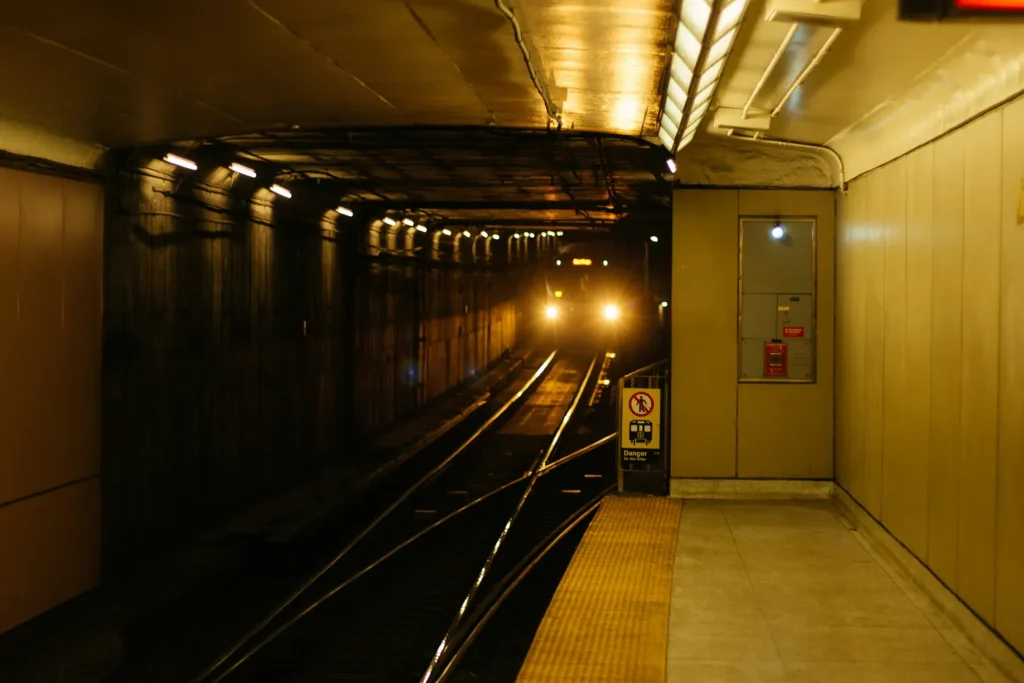
I remember standing in the Sherbourne subway station in Toronto, one cold, late-January twilight, waiting for the train, at ease in my end-of-the-day state, when an idea dropped in. What if my manuscript didn’t have to receive a “yes” in order for me to release my twenty-year position?
I’d done everything I’d wanted to as a schoolteacher, serving young people and their families through primary, junior, middle, and senior divisions. And with no administrative aspirations, I knew my growth in that setting had come to an end. My daughter was now an adult, and I’d made a life with a new partner who encouraged me to follow my heart. I even had a little savings. So, if I wanted to leave in order to rework my novel, couldn’t I just do it?
Half of me said yes, while the other half scuffled to convince me the idea was crazy.
Who just leaves?
Creative Resilience Practice #2: Look for the Helpers
For years, I’ve cherished the wise words of children’s television host, Fred Rogers:
“When I was a boy and I would see scary things in the news, my mother would say to me, ‘Look for the helpers. You will always find people who are helping.’”
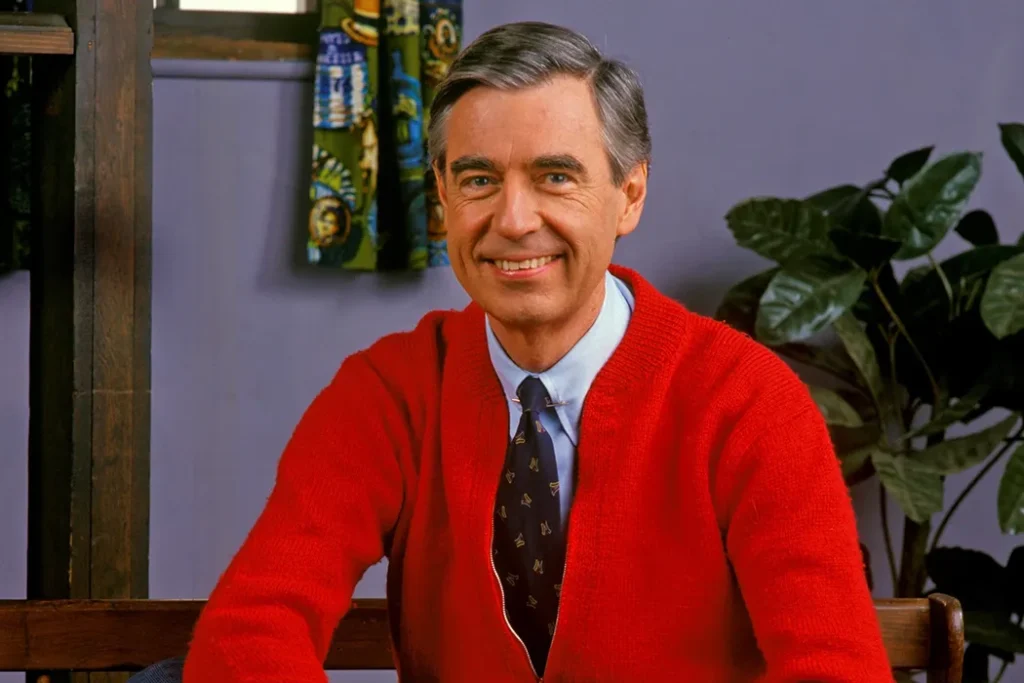
Mr. Rogers was referring to the world news, of course—ceaselessly bleak since my earliest, staticky, black-and-white-TV glimpses of the Vietnam War. And obviously, we don’t have to look across oceans to find hardship and anguish. There’s plenty of it in our home communities, just as—at all levels, from global to local—there are plenty of ways to get involved and try to help.
But there’s another kind of news, too. Those messages that come to us in extended, secret periods of despair. Winter days and nights of self-doubt, and the shame and self-loathing that can arise from fronting rejection. Perceived failures. At such times, despite the voice of inner guidance offering us a way forward, the gloomy mantras of that other kind of news can keep us down.
I believe human connections are vital to the creative process, and that the most beautiful creations require those connections. I also believe we’re meant to embrace all phases of the process, from the blissful to the difficult, and that humility is key to growth and fulfillment.
At school, humbled and half-heartbroken, I carried on as usual, not telling anyone about my manuscript perils. Still stuck in the dilemma of whether to stay or go, finally I reached out for connection, scheduling a meeting with one of my bosses.
When I told her I was feeling a pull to leave, I thought my head of school might try to “talk sense” into me. She didn’t. She listened. Throughout our conversation, my intuition was strong, and so was hers. I remember her looking at me and saying, “The only factor we can’t know is time. How much each of us has.”
That was it. Hearing her speak those words, I knew this was my moment to move on. And even if I didn’t get anywhere with my project, something would happen. Something always does.
A New State for Receiving
After I’d made up my mind, I began feeling lighter. Still nervous, but more joyful. Hopeful. Then, a different kind of email arrived in my inbox. One that gave me tingles. It was from a woman who mentored people, inviting me into a coaching program—a turn of events I couldn’t have foreseen.
What did I know about life coaching? Almost nothing. Yet, accepting the invitation to work with that mentor changed my trajectory in ways I could never have anticipated. Studying and applying transformative principles helped me to rework my book and find a publisher—though not by going the familiar routes. I had to release old habits and patterns, and learn new ones.
What is transformational life coaching?
Life coaches help us to gain clarity on who we are (our essential values and gifts), what we’d love to be, do, or have in order to experience greater fulfillment (our dreams), and what we can do to move forward aligned with our own sense of character and calling. The process is evocative, meaning the answers come from us, not the coach. To be transformational, the work requires our learning and application of a specific skillset.
For me, one of the ironies of engaging in coaching was that I came to value it so much, I wanted to train and be a coach—which is really another way of being a teacher. And so, not only did the process strengthen my writing life, but it renewed both the student and educator in me. Because life coaching has a spiritual dimension (though not a religious one), it felt right.
That was eleven years ago.
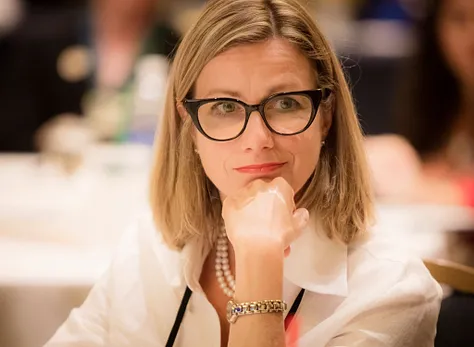
In addition to working as a writer, I’ve been serving as a transformational life coach now for almost a decade.
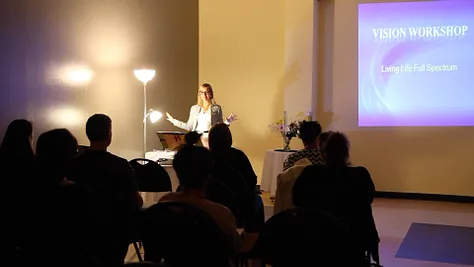

Why and when do people work with coaches?
A few scenarios:
- When we’d love an area of our life to improve, but feel blocked
- When a situation becomes so uncomfortable that we know we need specialized help
(Please note: Although the domains of psychotherapy and coaching sometimes overlap, in broad terms, the goal of working with a therapist is to heal, while the goal of working with a life coach is to achieve desired results; both paths often lead to new ways of being.)
- When we’d love help in clarifying a vision for our life
- When we’d love expert guidance in building a dream
A Writerly Note About Language
Some words feel expansive and give us green lights. Others cause us to put on the brakes. When it comes to honouring our gifts and highest expressions of creativity, we want green lights.
In the context of coaching, for some of us, the word “dream” feels loaded and causes push-back, even cynicism. If you’d prefer, simply use the term “creative project” instead of “dream.” I often do. Whatever helps to inspire you forward is best.
We are multi-dimensional beings. Like you, I am one person with various strengths and passions. Professionally, I am the “both and” combination of an artist and a helper. As a coach, I never forget that I’m a writer. The clients who’ve come to work with me over the years know and appreciate that I’m committed to finding the right words to help each person discover their own answers and unique path.
A Few More Thoughts About This Newsletter
Earlier this year, after I’d finished River of Dreams and the book had found a publisher (Guernica Editions, 2026), I knew I wanted to reach out and write to you again. To reconnect in fresh, new ways and offer value. I also knew it was time for me to bring the worlds of being a writer and life coach together as I never had before.
So, this series is a work in progress. There are times when I feel vulnerable writing to fellow writers and literary readers about coaching, and to my coaching clients about writing.
No matter.
If I’m not willing to be uncomfortable in the unknown, then what good am I as either a writer or a coach?
New Offerings
I love how Substack promotes the idea that it’s a beautiful thing to pay writers for our work, and that becoming a paid subscriber can simply be a show of support. If you’ve already upgraded to paid, or are about to, I thank you from my heart. Your contribution means a lot. With that said, it’s important to me to offer my newsletters for free. You don’t have to pay to keep receiving them, and I’m glad you’re here. At the moment, I’m doing my best to send you one each Friday. I’ll let you know occasionally when I take a short break.
Something else I love about Substack is how it’s given writers and other professionals a platform to provide additional services and material for a nominal fee. As of September, for paid subscribers to Awakening Wonder, I’ll be offering monthly creativity talks—taking into account that whether or not we’re writers (or artists in other disciplines), we are all creators of our lives. These talks are meant to provide you with actionable takeaways you can apply to your own process and unique dream or project.
Of course, receiving my recorded talks will not be the same as engaging in personal coaching. Yet listening to the talks and applying the ideas and exercises I offer can be a powerful way of getting started on a passion project, or getting back to one. If you and I have worked together before, then engaging with these short presentations can be an uplifting and motivational way to stay connected with some of the principles you learned during our series together, and to discover new things.
If you’d like to find out more about personal coaching, check out the coaching page on my otherwise writerly website and feel free to send me a message.
Let me know your thoughts and any questions. It’s always great to hear from you. And look for something completely different from me next week. Poetry.