Honouring Intuitions, Callings & Character
Dear Fellow Dreamer,
I believe in synchronicities and marvel at the uncanny. I also believe in dreams and intuitions as creative catalysts and guides. That brings me to you. And to the subject I’m exploring this week…

Are you working on a passion project? Longing to bring a dream into form? Or, are you in that place that Roshi Joan Halifax calls “the fruitful darkness”—a place of not knowing what’s next? Perhaps you’re unclear as to how exactly you’d love to direct your energies. You may be seeking a greater understanding of who you are. Desiring to claim your voice, build your capacities, realize your direction. If any of that resonates, please know that you’re in good company. As an adult, I’ve experienced all of those scenarios, and I continue to cycle through most of them. It’s what we do. All part of the adventure.
Regardless of the moment you’re in, I hope the piece I’m about to share will give you insights and spark ideas. It’s one of two excerpts I’m sending you, this week and next, from my book, Birdlight: Freeing Your Authentic Creativity. A book that surprised me—one that came by way of synchronicities. As I began drafting it nearly a decade ago, while also immersed in professional trainings and my new coaching practice, I let intuition take my pen. Each chapter centres on a particular type of bird: the animal’s physical attributes and behaviours; its characterization in mythology, folk stories, and fairy tales; and in terms of the creative process, each bird’s symbolism. Its medicine.
Eight years have passed since Birdlight was published in 2016; here, I’ve provided a new recorded reading, including my brief and occasional commentary.
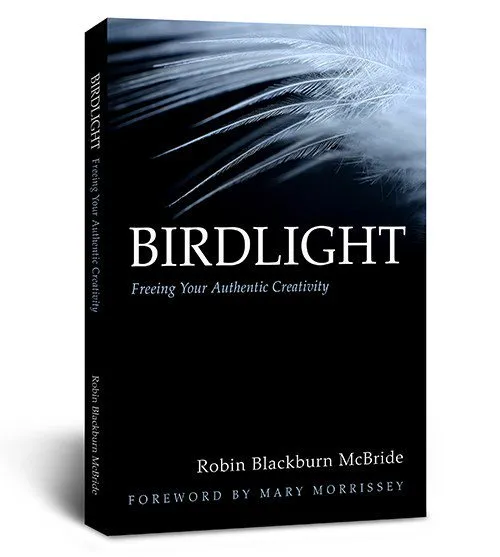
The selection that follows comes from the middle of “Chapter 3: The Robin: Freeing Your Authenticity” which opens with these two epigraphs:
To be yourself in a world that is constantly trying to make you something else is the greatest accomplishment.
—Ralph Waldo Emerson
Your time is limited, so don’t waste it living someone else’s life…. Don’t let the noise of others’ opinions drown out your own inner voice. And most important, have the courage to follow your heart and intuition. They somehow already know what you truly want to become. Everything else is secondary.
—Steve Jobs
From Birdlight…
More Thoughts on Character and Calling
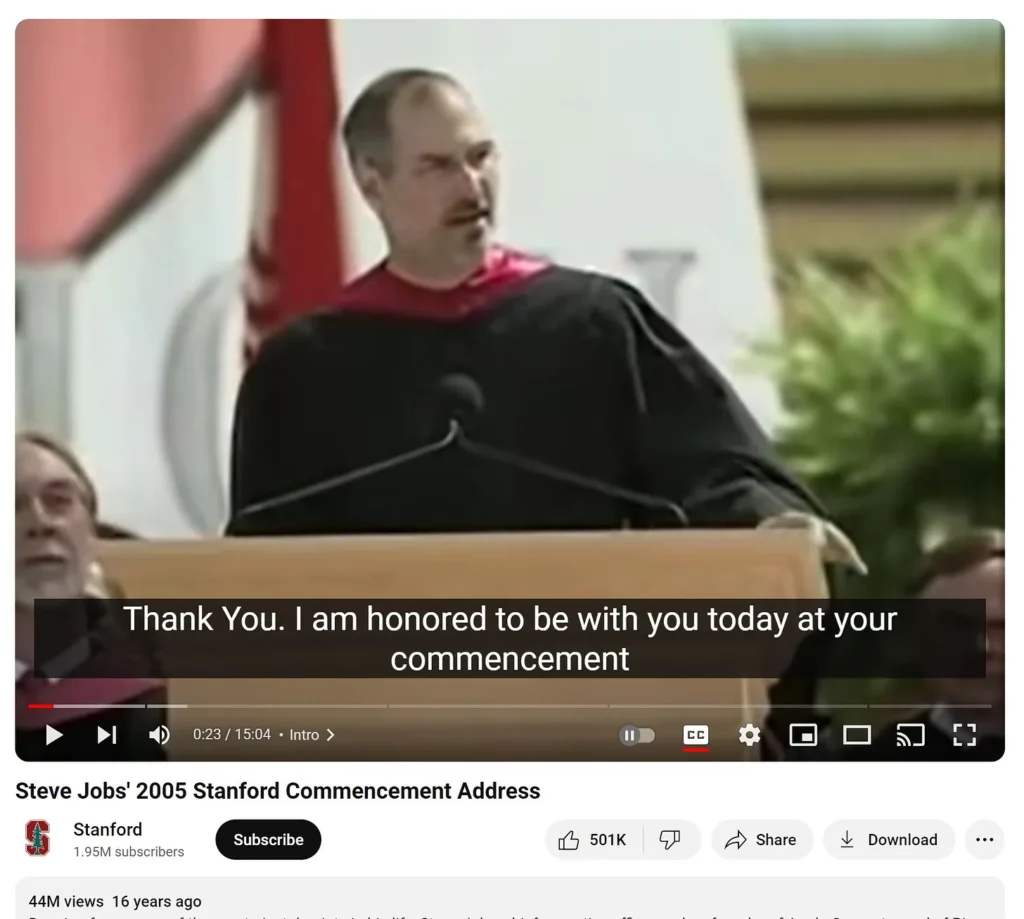
Like many, I am still awed by Apple founder Steve Jobs’ 2005 commencement speech at Stanford University. I’m grateful that I live in a time when, at the click of a button, I can listen to this visionary creator talk about his path. Despite everything, he always trusted his own curiosity, and that is the most vital message of his legacy. I love listening to Jobs speak about the impossibility of “connecting the dots” in our lives by looking forward. It’s only in memory that we see the signposts of our calling, our own authentic character and unique mission. “You have to trust in something,” says Jobs—“your gut, destiny, life, karma, whatever. This approach has never let me down, and it has made all the difference in my life.” Certainly, the approach allowed him to reframe the potentially disempowering experience of being fired from his own company at age thirty, to one of shifting from the “heaviness of being successful” to “the lightness of being a beginner again.” Moreover, being a beginner freed Jobs “to enter one of the most creative periods” of his life.
In Buddhist dharma, emphasis is placed on cultivating a beginner’s mind. Each day, as we awaken to the sound of birdsong, we have an opportunity to begin again—to fall in love with life once more. One of the paradoxical gifts of mastery in a chosen area of passion is realizing that living in alignment with one’s calling, and leading with one’s strengths, can help sustain a sense of freshness and joy in being ever a beginner. Jobs sums it up quite simply: “You’ve got to find what you love.”
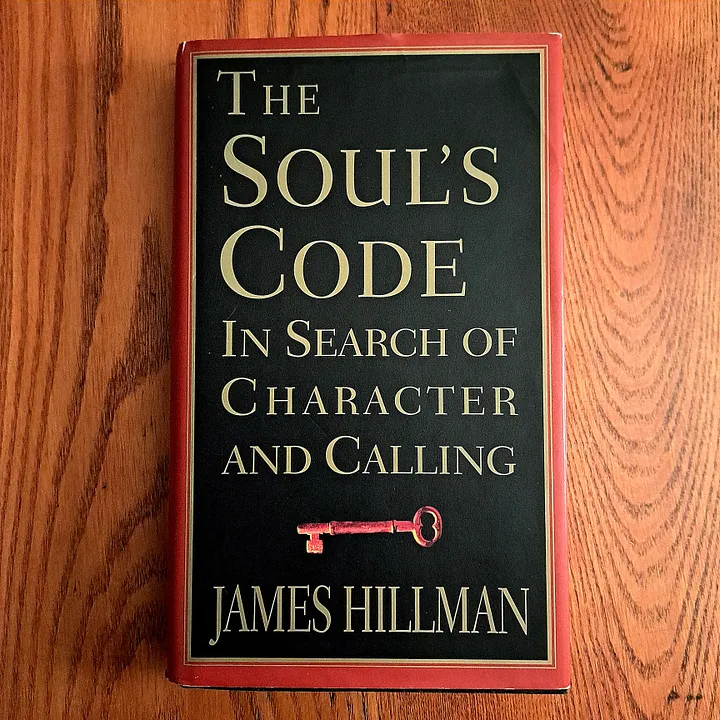
Finding what we love is about finding who we truly are. In preparing to write this chapter, I revisited a book I discovered many years ago, one that has been essential to my ongoing process of connecting the dots: James Hillman’s The Soul’s Code: In Search of Character and Calling. The author, an eminent Jungian psychologist, makes a case for paying attention to childhood’s significant moments—those times when, “out of nowhere, a fascination, a peculiar turn of events struck like an annunciation: This is what I must do, this is what I’ve got to have. This is who I am.” He goes on to state that for many, “the call may have been more like gentle pushings in the stream” in which they “drifted unknowingly to a particular spot on the bank.” A central message of his book is that we find the clues to our own unique mission in “humdrum miracles when the mark of character appears.” In remembering those shining moments, suddenly, more clues to our purpose may be revealed. In today’s culture, Hillman says, it’s easy to become distracted by memories of childhood traumas and miss the subtler, vitally important clues to personal calling and purpose.
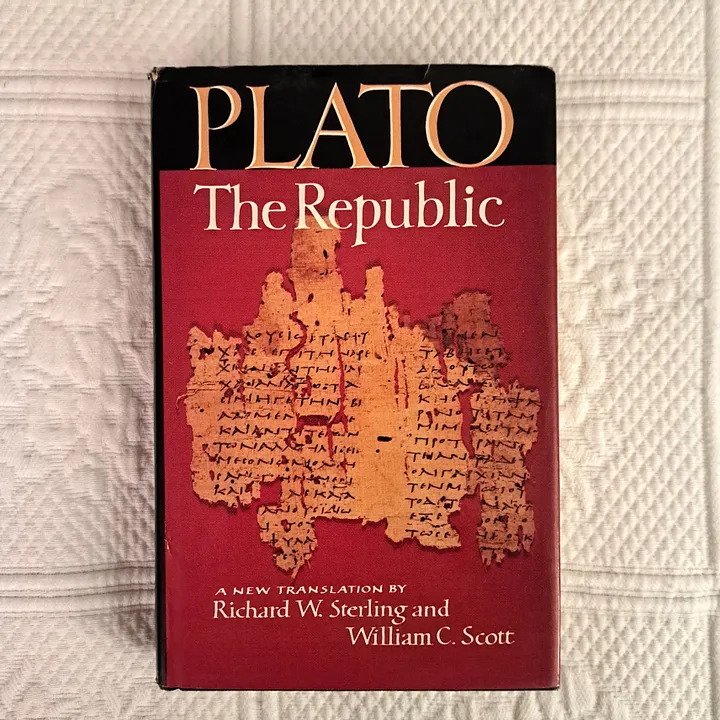
Hillman introduces childhood case studies of a broad range of people famous for their contributions. He also includes this brief discussion of Plato’s Myth of Er, one of the final stories in The Republic:
“Each person enters the world called…. The soul of each of us is given a unique daimon before we are born, and it has selected an image or pattern that we live on earth. This soul-companion, the daimon, guides us here; in the process of arrival, however, we forget all that took place and believe we come empty into this world…. Then, the myth implies, we must attend very carefully to childhood to catch early glimpses of the daimon in action, to grasp its intentions and not block its way…. A calling may be postponed, avoided, intermittently missed. It may also possess you completely. Whatever; eventually it will out. It makes its claim. The daimon does not go away.”
Keep this myth in mind as you connect the dots of your early experience, substituting for “daimon” whatever it is that you feel accounts for your own will force, passion, and authentic sense of mission (whether established or emerging).
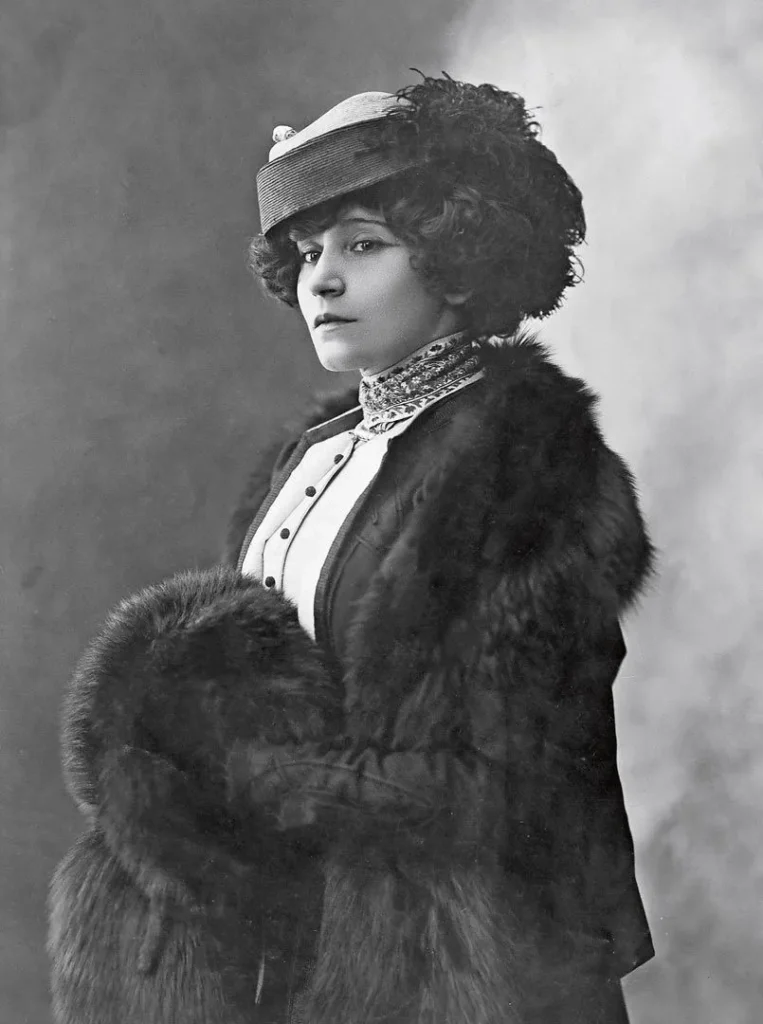
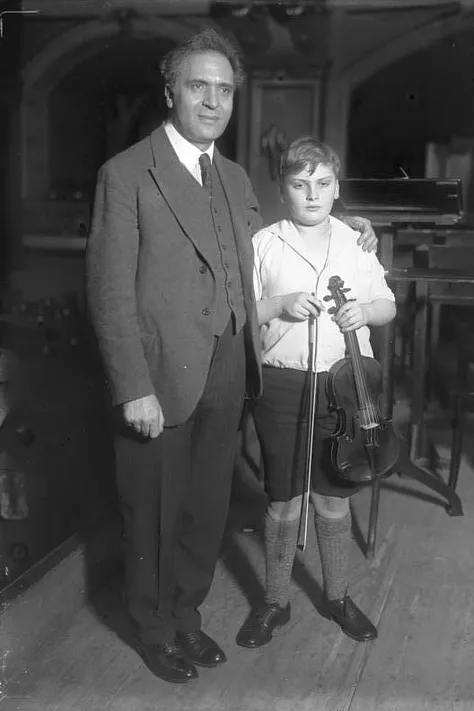
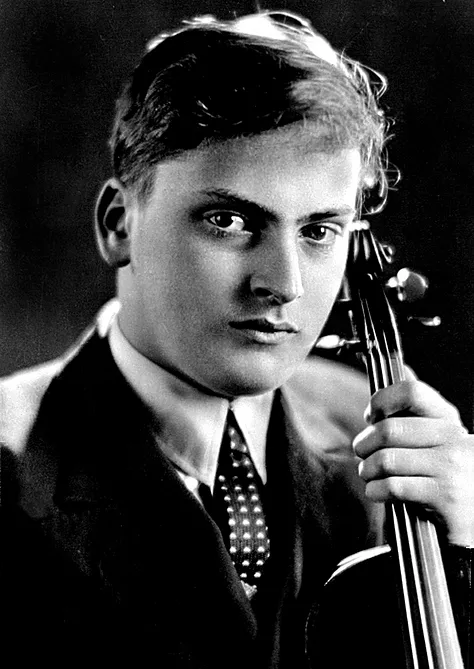
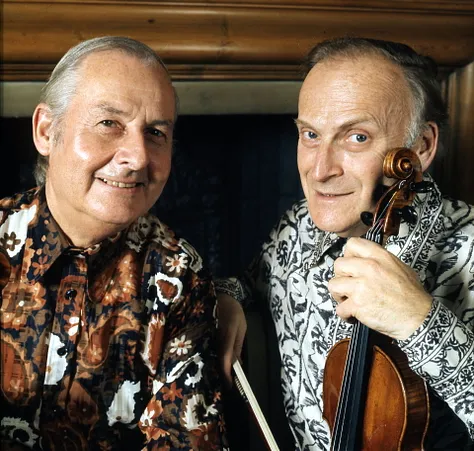
Hillman’s case studies are fascinating; not all of the “acorns” that develop into mighty “oak trees” are obvious. While some of the figures he describes, such as virtuoso violinist Yehudi Menuhin, displayed an early passion for the means to fulfill their callings, others began life looking and behaving very differently from their future selves. The discrepancies between child and adult inclinations and behaviours themselves tell a story. For example, the writer Colette would do anything but write when she was growing up; yet, despite her adamant desire not to write, she kept the tools of her future craft around her—and one day would describe those writing tools at great length and in sensuous detail.
The legendary Spanish bullfighter Manolete began life as a timid, frightened child, as did the future leader of India Mohandas Gandhi. Hillman suggests that an intuitive sense of the scale to which their missions would take them contributed to these two boys’ early inhibitions.
Evidence of a particular inhibition causing a child to retreat can be just as significant a marker of an authentic calling as is the “unexpected annunciation” that reveals a passion. Hillman also includes examples of a childhood “obsessional desire for the tools that make realization possible.” I love his account of Menuhin at age four matter-of-factly telling his parents that he wanted to study violin with a renowned musician, and that he wanted a fine instrument to get started on. When little Yehudi later received a toy violin for his birthday, the child flew into a rage. In his mind, he was not little! And, according to Hillman, neither was his daimon—nor is anyone else’s, for that matter.
Hillman cites creativity specialist and Harvard professor of psychiatry Albert Rothenberg as having isolated one common denominator in the personalities of exceptional creative achievers: motivation. “He rules out intelligence, temperament, personality type, introversion, inheritance, early environment, inspiration, obsession, mental disorder: ‘…only motivation is…present in all.’” I find that news reassuring. Motivation is a signpost we can look for in our childhood and young adult memories; it’s also something we can learn to access, cultivate, and build on in maturity. One of the reasons I love coaching is that it’s a dynamic, life-affirming, and expansive process of helping people harness the power of their own motivation. Living in alignment with a sense of authenticity and creative purpose is a powerful catalyst for each one of us, as we grow in making meaningful contributions to the world around us.
An Invitation to Connect the Dots
Working in education for many years has reinforced in me the belief that every child is gifted. We all arrive with special qualities. You were, and are, a one-of-a-kind contributor. Learning to recognize your gifts and to take action in alignment with your calling is a lifelong process—and one with great benefits not only to you but to others.
I encourage you to read through the prompts below and highlight the ones you feel have particular relevance to your creative journey. Respond to these highlighted prompts in your journal. As you begin the experience of making useful connections, linking the dots of character and calling, I invite you to pause and consider what exactly you desire for yourself creatively at this point in your life. What information do you seek in your journey back in time? What revelations from your past can help you in forming your present goals?
1. What strong memories, if any, do you have of early childhood? In those memories, can you find evidence of alignment between your behaviour as a child and your present creative interests and passions?
2. One of the things I realized in looking back at my early childhood was that, before external pressures came to bear, I was naturally a risk taker. This was quite a revelation to me, as in adulthood I’d often blamed myself for playing too safe. Are there any moments in your past where you witnessed yourself taking creative risks, for better or (seemingly) for worse? List any you can remember that caused you to feel a strong level of either success or discomfort. Both outcomes can be richly instructive.
3. Did you have a moment of “annunciation” when you just knew what you wanted to do creatively with your life?
4. Did you yearn for particular tools? If so, what were they? Do your memories of those desired items or conditions connect in any way to the tools you desire now?
5. In her research into the neuroscience of creativity at the University of Iowa, Nancy Andreasen, M.D. and Ph.D., notes that a common experience of highly creative individuals is their willingness to work harder than most other people—likely because they enjoy their chosen work. Can you remember any times in childhood when you went the extra mile in the service of something you loved? What about more recent times?
There are more prompts, but I’ll stop here…
As usual, I’d love to read your thoughts. Any memories? Insights? Inspirations? Please share your ideas.
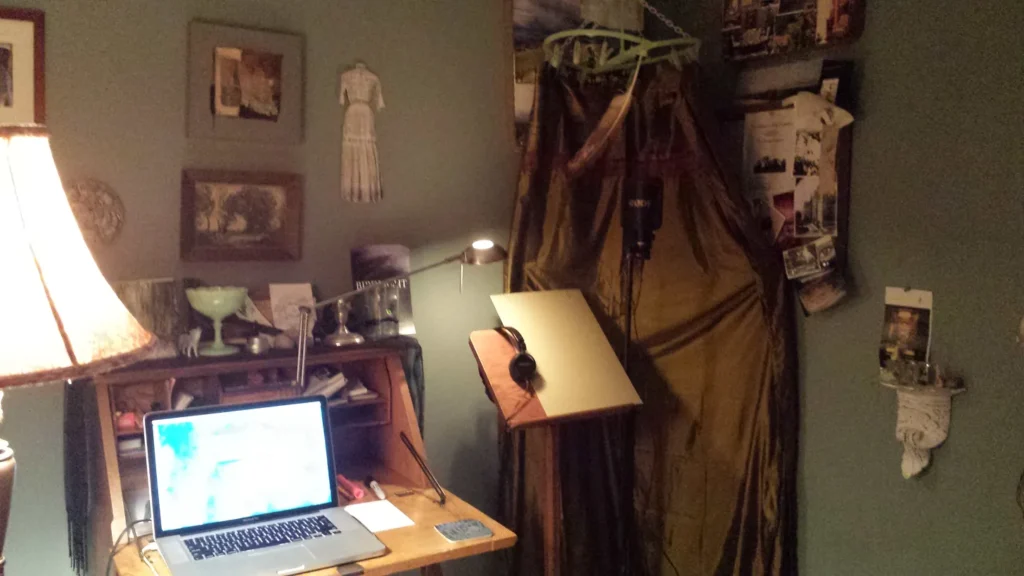
And one more thing. If you don’t already own a copy of Birdlight and are interested in getting the book, both the paperback and e-book editions are easy to find. The audiobook is available on Audible. Here’s a picture of my old study in Toronto where I recorded it, working through the night while the birds were quiet.